


 (65) 6908 8969
 (65) 6908 8969
How Do I Breathe Better Through My Blocked Nose?
Have you wondered why you always have a blocked nose? Why do you find it so difficult to breathe through your nose? Breathing through your mouth will give rise to a dry mouth, especially in the morning. Little airflow is entering your nose at night when you sleep!
Mouth-breathing is abnormal by the way……
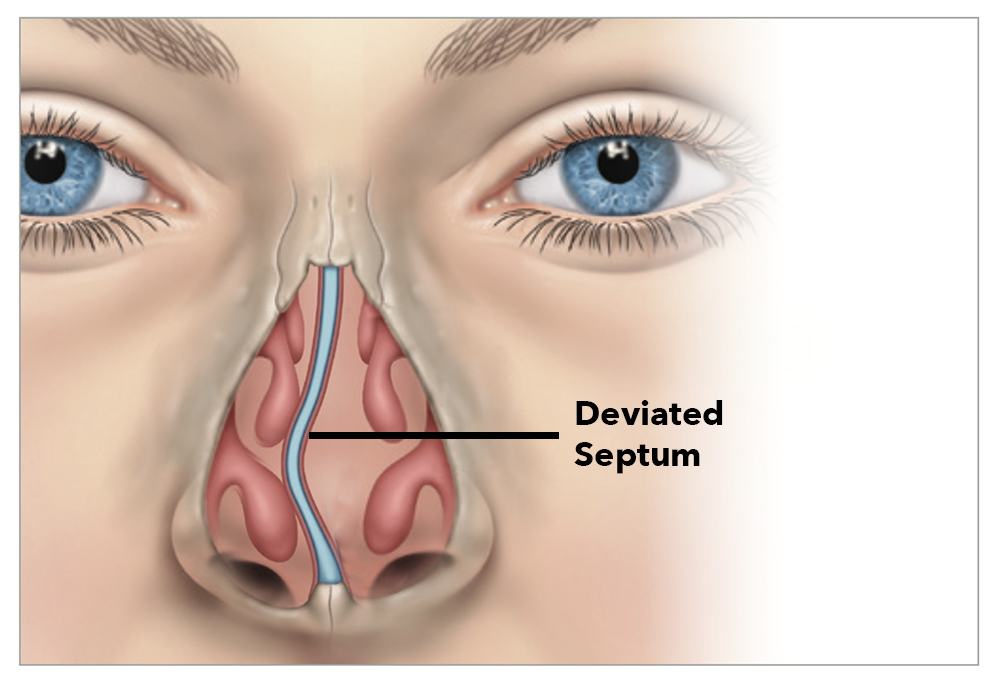
A) Deviated nasal septum and Blocked Nose
So why do you find it difficult to breathe through your nose? Could it be due to a deviated nasal septum? This might be developmental or caused by previous nasal injury. Surgery will straighten the crooked deviated septum to help you breathe more clearly. Medications will not help septal abnormalities.
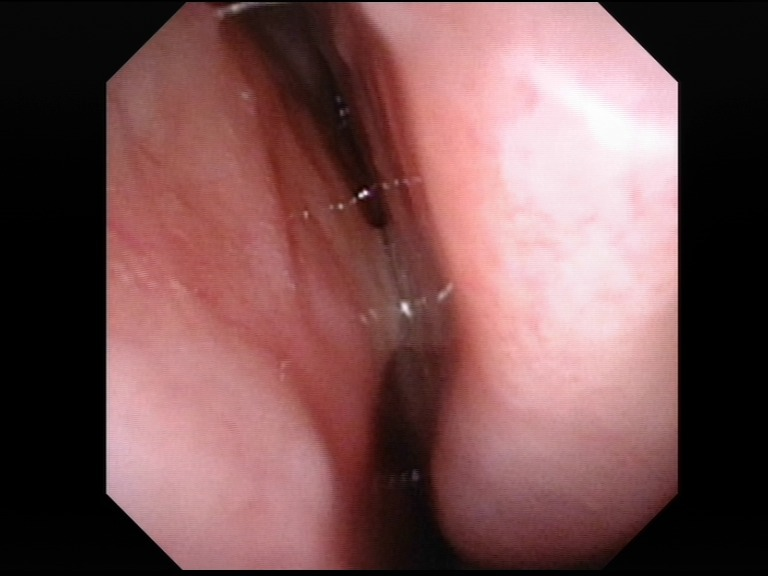
Below, the left nasal passage is severely narrowed by a nasal septum deviated to the left. Furthermore, it is blocked by a swollen inferior turbinate. The turbinate structure is the “sausage” of the nose which warms the air that you breathe. But if the turbinates become swollen, they will cause a blocked nose. Allergies are a common reason for turbinates to swell up. So please treat your allergies to prevent blocked nose problems.
B) Allergic rhinitis
Nose allergies or allergic rhinitis is very common in Singapore. This causes nasal congestion, runny nose and backdrip. In turn, this leads to itchy throat and “phlegm”. Your family doctor will usually prescribe nasal steroid sprays such as Avamys. Antihistamines such as Zyrtec help to control allergic rhinitis. Using a saline rinse to keep your nose clean can help to prevent frequent attacks of allergic rhinitis.
You need allergy testing to identify what could be irritating your nose. The allergy test may be a skin prick test in clinic. It may also be a blood test to include other allergens such as food. The standard allergy panel includes three types of house dust mite, cat, dog, mould and grass. Skin prick testing may not be suitable if you have taken antihistamines or steroids within the last seven days. The test result may return as a false negative. In comparison, an allergy blood test is unaffected by any of the usual allergy medication.
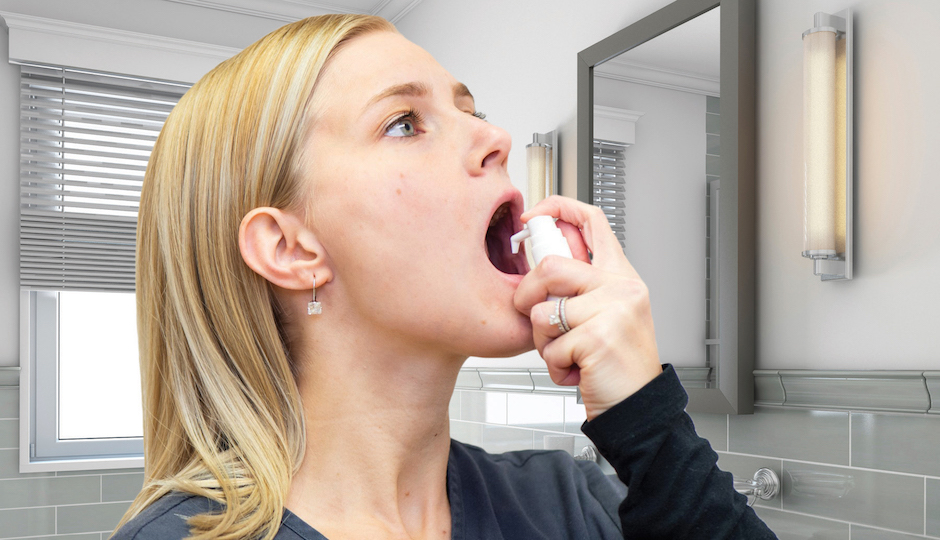
If indicated, sublingual immunotherapy (SLIT) may be helpful for you to consider. Desensitisation treatment from severe house dust mite allergies is quite common and effective. The lady in the photo is spraying SLIT under her tongue every day. SLIT does not contain steroids! In fact, SLIT is not classified as medication. So you can rest assured that SLIT is safe.
If allergic rhinitis is not well-controlled, you may fall ill with secondary sinus infections more often. Headaches and thick yellow nasal discharge with a fever are common symptoms. You will need a course of antibiotics to treat your sinus infection. Prevention is always better so it’s a good idea to rinse your nose daily with a saline douche.
C) Nasal Polyps
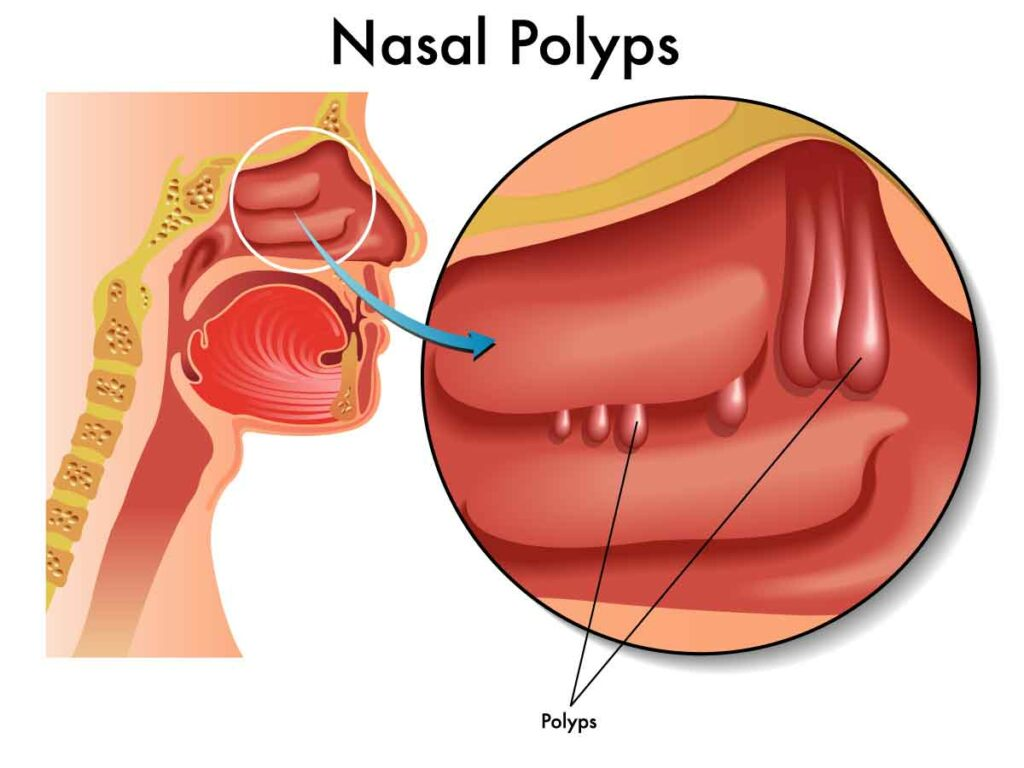
Nasal polyps can be rather troublesome consequences of allergic rhinitis. Nasal polyps grow as a result of the chronically inflamed nasal lining which thickens to form a grape-like lump. They are usually benign but may cause breathing problems when they get too large and block your airway.
Nasal polyps may block off the normal sinus drainage pathways, leading to growth of bacteria in your sinuses. A course of oral and topical steroids may control nasal polyps. However, this is not a longterm solution as they tend to grow back. Sometimes, surgery plays an important role to clear the nasal polyps. Some patients may need immunotherapy injections such as Dupixent for longterm control.
D) Swollen inferior turbinates: The “sausages of the nose”
Many patients with nasal congestion have forgotten how to breathe clearly through their nose. In fact, some of them think that breathing through their mouth is normal! NOT!
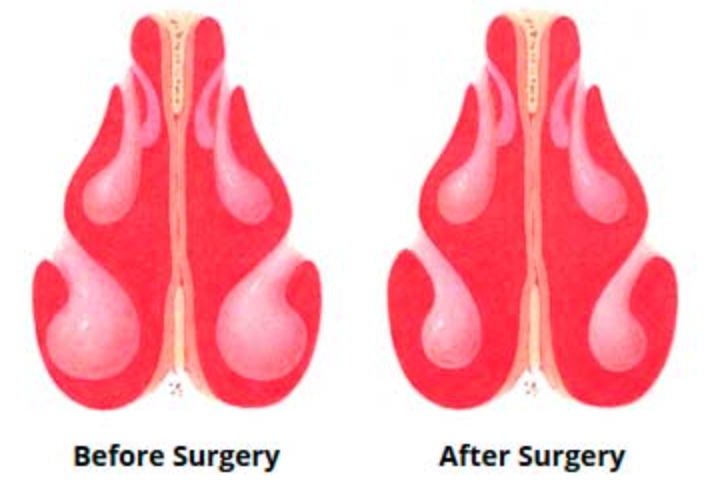
A VERY common cause of persistent nasal congestion is the swelling of soft tissue inside your nasal passages. This tissue is called the inferior turbinates. They normally warm and humidify the airflow breathed in through your nose. In Singapore, perhaps due to our high humidity, the turbinates are very reactive. They may swell up, leading to a blocked nose. Of course, the turbinates may swell up due to allergic rhinitis. So it is essential to consider allergy testing too.
Turbinate reduction surgery is very common in Singapore. With one form of turbinate reduction surgery, we use a small tool to heat up the swollen turbinate tissue. However, it does carry a higher risk of recurrence, especially if underlying nasal allergies still remain untreated.
Another form of turbinate surgery in the form of turbinoplasties has a far lower risk of recurrence. Here, we usually remove the inner turbinate bone after trimming the outer layer of soft tissue. So this means your puffy “sausages” of the nose are refashioned to become smaller “sausages”. This technique has much better long-lasting results.
CONCLUSION FOR BLOCKED NOSE
I hope this article on blocked nose has helped you to learn about the causes. More importantly, you now understand how you can treat your nose to breathe more clearly. Blocked nose is an important symptom which we can treat to help you breathe better.
Share this blog via: