


 (65) 6908 8969
 (65) 6908 8969
Sudden hearing loss: Do You Need Urgent Treatment?
If you suffer sudden hearing loss, you need to see your ENT specialist in Singapore early!
Early treatment means starting high dose oral steroids as early as possible to help you recover your hearing. Do you know that I usually see 3-4 cases of sudden hearing loss every month? Such patients are naturally very distressed about their sudden hearing loss. What happens if they don’t get their hearing back? In sudden hearing loss, the inner ear nerve centre is inflamed. So your inner ear needs to be treated with steroids promptly.
WHEN DO YOU NEED TO START TREATMENT OF SUDDEN HEARING LOSS?
Treat sudden hearing loss within the first 72 hours if possible. This golden window of opportunity is the best time to start treatment to maximise recovery of your hearing loss. Sadly, the chances for hearing to recover reduces with time. The peak time for hearing recovery is within the first 2 weeks. Tinnitus (inner ear noise), vertigo and dizziness are other common symptoms of sudden hearing loss. So it’s best not to ignore these other symptoms as they may herald sudden hearing loss!
It’s simple. The earlier you start treatment, the better the chances of hearing recovery. When some patients ignore their sudden hearing loss, they present late to their ENT specialist in Singapore. For example, some patients will present later than 6 months with sudden hearing loss which has not recovered. These cases are more challenging to treat frankly and may not recover.
WHY DID YOU SUFFER SUDDEN HEARING LOSS?
Many cases of sudden hearing loss are unknown. But viral infections of the inner ear, after influenza or Covid infections, may cause sudden hearing loss. This may occur without any warning at all!
Rarely, sudden hearing loss can affect both ears! In such cases, we usually suspect an auto-immune cause. In auto-immune conditions such as lupus and rheumatoid arthritis, antibodies may attack the inner ear. Pregnant women may also carry a higher risk of sudden hearing loss, likely due to hormonal changes. Some patients may have other medical problems such as diabetes, high cholesterol and hypertension. Such health conditions may affect the delicate inner ear blood supply.
We screen all patients with sudden hearing loss with an MRI scan of their inner ears. The reason is to rule out the presence of a small inner ear tumour, called an acoustic neuroma. This is a benign nerve tumour arising from the balance nerve in the inner ear. As it grows bigger, it begins to exert pressure on the neighbouring hearing nerve, resulting in sudden hearing loss.
Occasionally, sudden hearing loss may be the first presentation of Meniere’s disease. This interesting condition may present with recurrent episodes of blocked ear, dizziness, tinnitus and sudden hearing loss. Some patients have a family history of Meniere’s disease. High levels of salt, caffeine and stress may also trigger Meniere’s disease.
What about vaccination leading to sudden hearing loss? Some studies suggest that vaccination carries a higher risk of sudden hearing loss, particularly with the Covid vaccine. Whether this risk of sudden hearing loss after vaccination is any higher than that due to viral infection, remains to be seen.
HOW CAN WE TREAT SUDDEN HEARING LOSS?
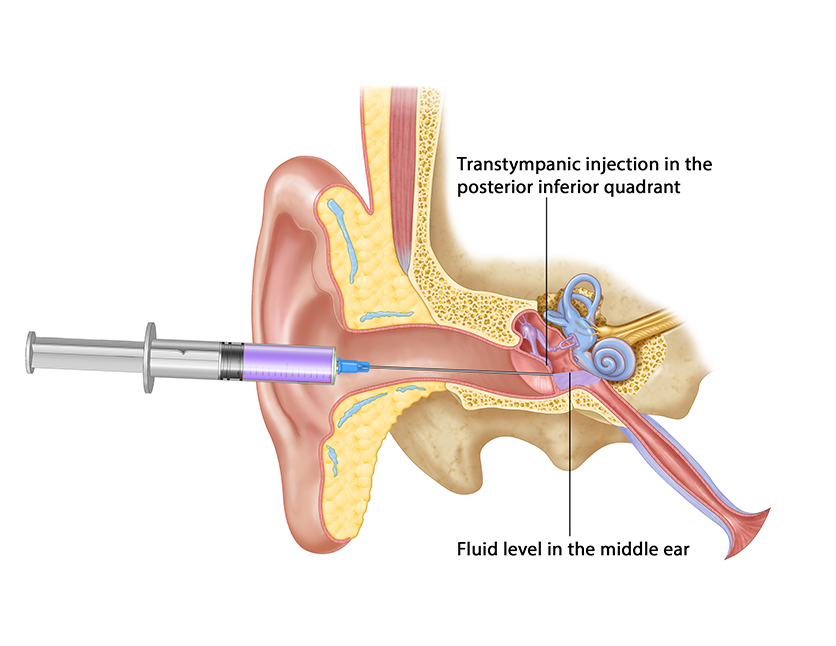
Doctors try all sorts of medications to maximise hearing recovery after sudden hearing loss. Guess what? None have been proven to work with strong evidence base. However, steroids possess the strongest evidence for increasing the chances of hearing recovery. Have the Steroids as oral tablets or intratympanic eardrum injections under local anaesthesia. These may be performed easily in clinic.
We usually prescribe the high dose steroids for a week then taper down gradually over the next 1-2 weeks. I would not go higher than 60 mg daily for long. Steroids may elevate blood sugar levels and lead to high blood pressure. In addition, steroids may cause fluid retention and mood swings. If taken too late at night, steroids can cause insomnia and gastritis. So ideally, take your steroids in the morning after food!
WHAT ABOUT INTRATYMPANIC STEROID INJECTIONS FOR SUDDEN HEARING LOSS?
If you are diabetic, then oral steroids aren’t the best option. Oral steroids will increase your blood sugar with sudden sharp spikes. A course of intratympanic steroid injections into your eardrum may be more appropriate as targeted therapy into your inner ear. Intratympanic steroid injections are quite safe, without any systemic side effects. The aim of these injections is to introduce the medication directly into your inner ear. Such injections are not painful and are well-tolerated.
Although intratympanic steroid injections may be offered as salvage therapy after oral steroids have failed, many patients would start intratympanic steroid injections straight away. Yes, simultaneously as their oral steroids! Why would they start both oral and intratympanic steroids at the same time? I suspect most people would try everything they could to recover their hearing! I would do the same thing too if I were in their shoes. Intratympanic steroid injections are much safer than oral steroids. The downside is that you do need at least 3-4 injections, usually given on alternate days. Some of my overseas patients may choose to have the injections on a daily basis as they wish to fly home soon.
CAN I CLAIM MY INTRATYMPANIC STEROID EAR INJECTIONS FROM INSURANCE?
One common question patients ask is if they can claim their intratympanic steroid ear injections from their insurance. So let’s explain this clearly for your benefit.
In Singapore, intratympanic steroids injections are Medisave claimable as “day surgery” procedures and hence, usually covered by insurance. So many patients can easily proceed with these eardrum injections if they choose to do so. We then e-file their bill for them to their insurer and Medisave. When the insurer has reimbursed our clinic, we promptly return this money back to the patient. It’s quite a smooth and easy process for us because we do this all the time for so many patients! It does help that my clinic has a lot of experience with helping patients sort out their insurance claims.
Even if you do not have private insurance, you can still claim a large portion of the bill back via your Medisave. So don’t worry, there’s usually a smooth way to get reimbursed for this.
SHOULD I BE WATCHING MY DIET IF I HAVE SUDDEN HEARING LOSS?
In most cases of sudden hearing loss, you do not need to avoid anything to eat.
But if your sudden hearing loss is due to Meniere’s disease, then sometimes, sticking to a diet with low salt can be helpful. This is not easy because a lot of foods contain high salt levels. Cheese and ham are high in salt content. Eating out a lot also means that you have little control over your salt intake. Maybe go easy on the food delivery habit too!
Avoiding caffeine may also help you minimise attacks of sudden hearing loss. Caffeine is found in coffee, tea and dark chocolate. Chinese tea also contains a lot of caffeine, which some people may not realise. Too much caffeine is not good for your inner ear.
CONCLUSION
I hope you have understood the importance of treating sudden hearing loss early. You now know what to do! Remember, we just want to give your ear the best chance of hearing. Please don’t ignore any new symptoms of hearing loss and blocked ear. Tinnitus may also be an early warning sign of sudden hearing loss. If you hear a strange noise in your ear, that’s tinnitus! It’s a sign that your ear is disturbed by something so consider seeing your friendly ENT specialist in Singapore early.
Share this blog via: