


 (65) 6908 8969
 (65) 6908 8969
How To Treat Blocked Nose and Allergy: SLIT

Have you been suffering from blocked nose and allergy? In Singapore, many people keep having persistent nasal congestion with difficulty breathing. This is often due to allergic rhinitis. When nasal obstruction has been present for too long, many forget how to breathe clearly through their nose! They mistakenly assume this to be “normal”!
What are the symptoms of allergic rhinitis?
Blocked nose and allergy cause troublesome symptoms of itchy ears, blocked ears, sore throat and a itchy cough. Some patients keep clearing their throat repeatedly to try to get rid of their mucus backdrip. Others may get red, itchy watery eyes that only improve with antihistamine eyedrops.
Children with poorly-controlled nasal allergies can present with recurrent nosebleeds too. Their parents often are unaware that their child has been displaying symptoms of allergic rhinitis. For example, constant rubbing or digging of their nose, blinking frequently, sniffing and snorting, should alert you. These are all common signs that your child is actually bothered by allergic rhinitis.
What else do I need to know about allergic rhinitis?
Allergic rhinitis can present in so many different ways in both children and adults. Blocked nose and allergy are just the most common presenting symptoms! But the first-line management is the same: You need to find out the triggers for your nasal allergies and understand what is causing your allergy to flare up. Many patients with allergic rhinitis may also have skin allergies like eczema. Poorly-controlled postnasal drip of mucus in allergic rhinitis may lead to chest irritation. Then this may trigger a bout of allergic asthma. Allergic rhinitis is a common source of inflammation for asthma to flare up. So it is important to treat the nose as the root cause of allergy!
Until you find out what allergens are exacerbating your blocked nose and allergy, you will probably just be using the usual medications such as nasal steroid sprays and antihistamines. Use a sinus rinse to gently rinse out your nose before you spray your nose with nasal steroid sprays. The spray medication will be absorbed better to help your blocked nose and allergy. Investigating which allergen is driving your nasal congestion to flare up will require allergy testing. You can choose between a blood test or a skin prick test. It is important to make sure you test for ALL three types of House dust mite species in Singapore.
Is allergic rhinitis genetic?
Yes, allergic rhinitis runs in families! There is a genetic predisposition to allergies, including nose and skin conditions. The other triggers are usually environmental from something around you, perhaps at home or at work.
If one parent already suffers from allergic rhinitis, allergic asthma or skin allergies like eczema, then there is a pretty high chance that the child will have similar atopy (hypersensitivity or allergy) and present with allergic rhinitis later. So don’t be surprised if your blocked nose and allergy seem to run in your family!
What will happen if allergic rhinitis isn’t properly treated?
Good question so here’s what you should know if you don’t treat nasal congestion:
Poorly-controlled allergic rhinitis affects your sleep and quality of life. If you can’t sleep well at night due to your stuffy nose, then you will inevitably end up mouth-breathing. After a whole night of breathing through your mouth, you will probably wake up tired with a dry mouth and sore throat. Some people with severe allergic rhinitis find themselves falling ill more often as the air breathed in through their mouths is unfiltered, cold and dry. Your nose warms and humidify the air you breathe in, as well as filters out all those nasty viruses and bacteria!
If you don’t treat your nasal congestion properly, then you may start snoring or your snoring may worsen. Snoring is the noise you make when your airway is obstructed, although sometimes it’s also your throat that is causing the snoring. Blocked nose and allergy will just worsen your airway obstruction further.
When your nose is congested, then micro-organisms easily grow in the trapped mucus inside your nose. This increases the risk of developing a sinus infection, presenting with headaches, fever and green nasal mucus. If there is infection inside your stuffy nose, this will worsen your symptoms. You might then need to start a course of antibiotics.
If your allergic rhinitis continues untreated, then there is a higher risk of going on to grow nasal polyps. Nasal polyps are benign fleshy growths which will block your sinuses if too big. Then your breathing difficulty is likely to worsen as the nasal polyps grow larger.
Is it dangerous to sleep with a blocked nose?
Do you know that some parents unwittingly tape their children’s mouths shut at night? They do this to try to train them to breathe through their stuffy nose. But this may be unsafe because children and adults with persistent nasal congestion rely on their mouths to breathe enough oxygen. So if you block their mouths with tape, they won’t be able to breathe much at all, especially when asleep! Please don’t tape your child’s mouth unless you are sure that they can breathe well through their nose.
Nasal obstruction may cause persistent snoring, mouth-breathing, restless sleep and poor sleep quality Some children suffer night terrors or even begin sleepwalking! Adults with nasal obstruction may find it difficult to breathe clearly through their nasal passages, worse when lying down at night to sleep. Having a constant blocked nose, but no cold is COMPLETELY ABNORMAL by the way.
Some people notice the nasal congestion even more when they exercise because they now need more oxygen to breathe in. A common complaint I hear from my patients is, “Doctor, I always feel like I can’t breathe properly when I exercise or when I have to lie down to sleep. It’s like I’m not breathing in enough oxygen through my stuffy nose!”
How do I know if I am mouth-breathing when I sleep?

Well, if you frequently wake up with a dry mouth and sore throat, then there is a good chance that you are a mouth-breather! Sometimes, if mouth-breathing has been ongoing for a long time, your teeth may become stained and the risk of dental issues may also increase. Blocked nose and allergy symptoms just worsen mouth-breathing problems more!
In children who start off as mouth-breathers at a young age, they may also drool and have a runny nose. They may grind their teeth when asleep, toss and turn or even go round the bed in a restless pattern. Some may even wake up at night, saying they find it difficult to breathe through their nasal congestion.
Mouth-breathing in children is unhealthy because it may begin to change the shape of their facial structure as they are still growing at a rapid pace. So mouth-breathing should be assessed at an early age and corrected before it is too late (like after they stop growing!).
An experienced ENT doctor can usually spot who are the persistent mouth-breathers!
How to open blocked nose instantly to breathe more clearly?
Well, you can buy a simple nasal decongestant spray from any pharmacy which works well to relieve nasal congestion. But please be aware that use of such decongestant sprays for longer than 7 days is strongly discouraged. This is due to systemic absorption of the nasal decongestant chemical into your body with long-term use. This may lead to high blood pressure and rebound side effects of nasal congestion, worsening your symptoms.
These are the nasal decongestant sprays bought off the counter which you should NOT be using for more than seven days:
- Afrin
- Iliadin
- Oxymetazoline
- Phenylephedrine
- Nazolin
- Nazal (sold as Sato spray in Japan)
What is Sublingual Immunotherapy (SLIT) for?
Just like at well-known allergy centres overseas such as the Cleveland Clinic, our ENTcare clinic in Singapore, offers sublingual immunotherapy (SLIT). SLIT is desensitisation treatment for the three species of House Dust Mites which trigger nasal allergies, allergic asthma and skin allergies. House Dust Mites are the Number One cause of nasal allergies in Singapore.
Using your nasal steroid sprays and antihistamines to ease your nasal congestion is just a method to control your symptoms. It doesn’t really treat the underlying root cause of your allergic rhinitis. Ideally, people who suffer from severe allergic rhinitis due to House Dust Mite allergies should start a course of SLIT. SLIT is up to 80% effective if used for at least 3 years. It’s easy to use and doesn’t have any weird funny taste at all.
SLIT comes in either a tablet or spray which is applied under your tongue for absorption. Don’t put the SLIT spray in your nose by mistake!
By the way, SLIT isn’t actually medication. It contains specially isolated proteins from the house dust mite species that you are allergic to. You should view SLIT as a very safe and gradual way to train your body to cope better with house dust mite allergy. SLIT is actually backed by strong evidence in multiple academic publications: A period of 3 to 5 years of SLIT treatment is required for effective longterm treatment of allergic rhinitis caused by house dust mite allergy.
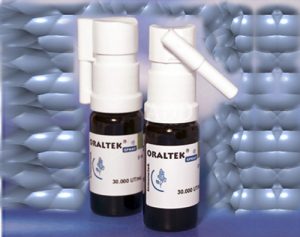
An example of sublingual immunotherapy (SLIT) for house dust mite.
Well, I hope you have learnt all about allergic rhinitis, blocked nose and sublingual immunotherapy (SLIT) from my article. The key is to recognise your symptoms of allergic rhinitis and start the right treatment for your nose.
Share this blog via: