


 (65) 6908 8969
 (65) 6908 8969
The Complete Guide To Blocked Ear Pain and Pressure
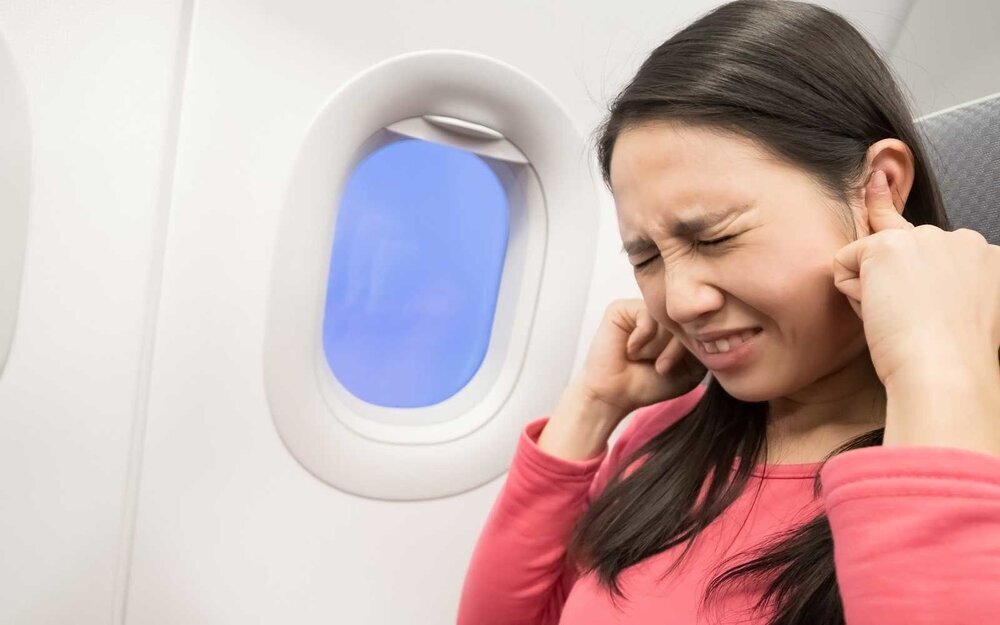
Did you know that many people suffer from difficulty trying to pop their ears? When do you need to equalise your ear pressures? It’s usually during a flight, especially during landing. The pressure building up behind your eardrums increases tremendously. This pushes on your delicate eardrums to cause severe earache with risk of eardrum rupture.
CAN I FLY IF I AM SUFFERING A BAD COLD OR FLU?
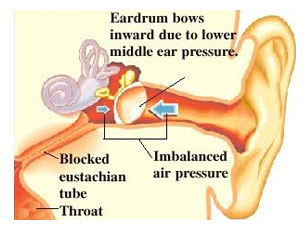
You should NOT fly if you are suffering a bad cold or the flu. Or if you are having a “morning sinus” flareup making your nose blocked and runny. All the soft tissue swelling and sticky mucus secretions will block the back of your nose. So this is where the narrow openings of your Eustachian pressure tubes lie. Your Eustachian pressure tubes will find it more difficult to “pop” open naturally to release the pressure.
Flight take-off isn’t usually the critical time for the Eustachian pressure tubes. It is the flight landing which challenges your ears and sinuses. So if the pressure tubes can’t open, this will lead to severe ear pain, blocked ear and sinus headaches.
WHAT DO I NEED TO KNOW ABOUT EUSTACHIAN TUBE PRESSURE PROBLEMS?
As a busy ENT specialist in Singapore, we see many patients with recurrent blocked ear symptoms. Many patients with ear issues also suffer from nasal congestion, mouth-breathing and sinus pain. The ear opens up to the back of the nose via the Eustachian pressure tube.
The Eustachian pressure tube is the most troublesome structure in the ENT world! It is a very deep structure which is difficult to access with instruments. In addition, it is an unpredictable structure which causes all sorts of weird symptoms! People may notice an echoey feeling inside their ears and tinnitus noises. They may suffer low frequency hearing loss with popping, crackling noises. Some people keep having a habit of moving their jaw forward and backward to try to open their pressure tubes. The jaw muscles are attached to the Eustachian tube structures so they do this to try to open them.
Do you suffer recurrent sinus infections and nasal allergies? Do you constantly have a blocked nose with difficulty breathing? If so, then your Eustachian pressure tubes may be at risk. For example, you may find it difficult to “pop” your ears during flights, in high speed lifts in tall buildings and fast trains going through tunnels. Some adults have had chronic Eustachian pressure tube problems all their lives. It started early in childhood but they never realised it was due to their nasal issues.
Over a long time, your eardrums may gradually be retracted (“sucked in”) due to the abnormal negative pressures behind the eardrums. If you cannot “pop” your ears easily, then that usually means your Eustachian tubes don’t work well. This may make it challenging for you to attempt scuba-diving, flying and mountain-climbing.
So what can you do to help your poor Eustachian tubes work better for you?
WHAT CAN I DO TO HELP MY EUSTACHIAN TUBES GET BETTER?
Firstly, you could try spraying your nose with a decongestant nasal spray bought over the counter. These include Otrivine, Afrin, Oxymetazoline, Iliadin and Nazolin. But you should NOT be continuously using nasal decongestant sprays daily for longer than 5 days.
Long term use of decongestant sprays is associated with a condition called rhinitis medicamentosa. Your nasal linings become thin and increasingly inflamed, with blood vessels growing abnormally. This leads to increased risk of bleeding and high blood pressure as the drug is absorbed into your body. In time, this will result in much worse nasal congestion than before.
Some patients have been so dependent on these decongestant sprays that they cannot live or sleep without spraying their nose everyday! This may even have been going on for many years! If this sounds like you, then you need to see your friendly ENT specialist in Singapore. The good news is that surgery can help to improve your breathing through your blocked nose. So you can STOP depending on those decongestant nose sprays!!!
WHAT NOSE CONDITIONS CAUSE BLOCKED EAR SYMPTOMS?
Many people don’t realise that blocked ears and Eustachian tube problems are related to nasal conditions. These include deviated nasal septum, nasal allergies and sinus issues. Having a deviated nasal septum means your nose is crooked inside, narrowing the nasal passages. Such ENT conditions are usually chronic and recurrent but they can affect the function of your ears and pressure tubes. Amazingly, some people have had a persistently blocked nose all their lives due to deviated nasal septum and nasal allergies! They just forgot how to breathe clearly and properly, hence mistake this for “normal”!
There are helpful ways to sort out your ear pressures and nasal conditions, if medications fail to improve blocked ears and breathing. Dry mouth, especially in the morning, is a sign of persistent mouth-breathing at night. This tends to occur because your nose is congested! Quite frequently, patients who think they have sinus infections or “morning sinus” don’t turn out to have sinusitis at all. Instead, they actually have nasal allergies!
IS ALLERGY TESTING HELPFUL FOR BLOCKED EAR PROBLEMS?
Once we diagnose your ENT condition, the approach is very different. You may not need to have antibiotics. You should be thinking about allergy testing to find out why you keep having a congested nose and ears! Did you realise that having a persistently blocked nose caused by deviated nasal septum, carries a higher risk of chronic or recurrent sinus infections?
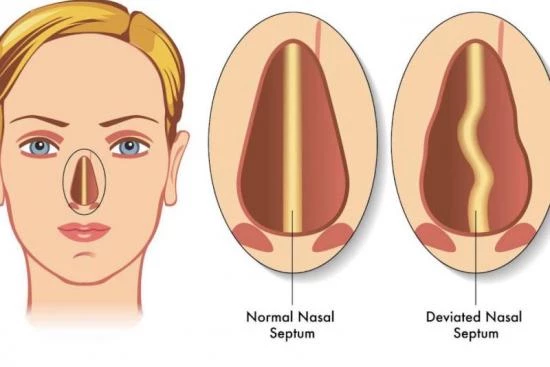
The nasal septum divides your nasal passages in the centre. Sometimes, the nasal septum is not straight but deviated or crooked, making one side of the nose narrower. This in turns affects the airflow and mucus production. So this explains the symptoms of persistent nasal congestion, difficulty breathing, backdrip and blocked ear symptoms.
WHAT CAN I DO TO TREAT EUSTACHIAN TUBE PROBLEMS?
Some common procedures which might help your ears and nose include:
- Ventilation tubes for your ears (also known as grommets)
- Balloon dilation of the Eustachian pressure tubes
- Septoplasty (correction of the deviated nasal septum to breathe clearly)
- Turbinoplasties (Reduction of the enlarged “sausages” inside your nose)
- Clarifix (“freezing” of the hypersensitive nerves which control mucus production in your congested nose)
- Adenoidectomy (Removal of enlarged lymph gland tissue blocking the back of the nose and Eustachian pressure tube openings)
- Nasal polypectomy and endoscopic sinus surgery. Some patients may need removal of nasal polyps, which can grow to block your nose and sinuses. Surgery aims to improve the drainage of your blocked sinuses.
The above list of common procedures can help to clear your blocked nose and blocked nose if medications don’t help. Ultimately, it depends on the clinical findings detected by your ENT specialist. The treatment approach will then be guided by what’s going on inside your nose and ears. You can rest assured that there is a very good chance you will be breathing better after that, in turn helping your poor blocked ear issues improve too!
Share this blog via: