


 (65) 6908 8969
 (65) 6908 8969
Tinnitus in the Ear: Will I Suddenly Lose My Hearing?

Have you noticed a sudden annoying noise in your ear or ears recently? This is called Tinnitus, a word which means any sound in your ear(s). This could take the form of ringing, buzzing, humming or crackling. The meaning of the word Tinnitus originates from the Latin term, “tinnire”. What does “tinnire” mean? To ring or tinkle! Tinnitus is all about having the perception of a noise in your ear. In most cases, only the sufferer is able to hear so this is called subjective tinnitus.
Objective tinnitus occurs when everyone else can hear the noise in your ear too. This is rarer and definitely needs urgent investigation. Why? This may signify an abnormal blood vessel condition or malformation. Subjective tinnitus is much more common though. But if tinnitus is sudden, it should be investigated promptly before it leads to hearing loss, dizziness and vertigo. These symptoms may be the warning signs of an impending stroke! So you may need to have an urgent brain scan to investigate this.
WHAT CAUSES TINNITUS?
If only YOU can hear the tinnitus in your ear, then what could be the cause? Is it something you should worry about? Remember, the word tinnitus only describes the symptom itself. It is NOT a diagnosis.
I think tinnitus is one of the most common ear conditions seen at my ENT clinic. Many tinnitus patients desperately need help because they do not understand their condition. They worry that it may be due to an underlying brain tumour!
Multiple causes of tinnitus exist and we will list a few of the common causes below.
1. Infection of your ear and surrounding structures:
As tinnitus is usually the earliest sign of something abnormal in your ear, even the mildest infection can lead to tinnitus. Severe ear infections lead to blocked ear, ear pain and hearing loss. If untreated, it can cause facial and neck swelling due to inflammation of the nearby lymph nodes. So if this happens, you should see your ENT specialist early to start treatment and have your ear examined properly.
2. Impacted earwax:
Did you know that the ear is a self-cleaning organ in most people? This means that you should not dig your ears, even with cotton buds or your fingernails. Digging your ears will just end up pushing the earwax even deeper. Or worse, you might end up injuring your ear canal or eardrum! So please do not dig your ears at all. It is an unhealthy habit that runs the risk of ear infection.
However, some people just have narrow ear canals which tend to trap wax deep inside. Other may suffer from skin disorders such as eczema, making their ear wax dry and easily impacted. There are structural causes for why some people keep getting earwax.
Wax is made of the ear canal skin which is shed off. Most people don’t have problems with wax but unfortunately, some others do. Using some olive oil can help to soften the earwax but it doesn’t always help. By the time earwax causes a blocked ear, it means that the wax has impacted itself deep in the ear and now needs removal. Buying a video scope and trying to remove the trapped wax yourself, usually doesn’t work. Candling your ear is an even worse idea as it is useless and carries the risk of hot candle wax injuring your ear.
3. Hearing loss, especially Sudden Hearing Loss
Tinnitus can sometimes be the earliest sign of something abnormal occurring inside your inner ear, where the cochlea and its nerve endings lie. Your need to treat your sudden hearing loss as soon as possible to maximise hearing recovery!
Sudden hearing loss is a rare condition which may be caused by noise damage, viral infection and rare inner ear tumours. However, in many cases, it is idiopathic. This means that no cause may be found. Sudden hearing loss can happen to anyone at any age. Some studies suggest the risk factors include high stress levels.
If this happens to both your ears, it is very unusual and may suggest some underlying autoimmune disorder. Autoimmune conditions involve antibodies attacking different parts of your body. In this case, if it is your inner ear, then it may lead to sudden dizziness, tinnitus and hearing loss. It can be extremely distressing to lose your hearing in one ear but imagine if both ears are affected!
Gradual hearing loss is the more typical picture as we grow older. It doesn’t always mean that tinnitus will start with hearing loss though. Sometimes, even people with excellent hearing may notice tinnitus. But other people with severe hearing loss may not have any tinnitus at all!
So you now see why tinnitus is such a strange and unpredictable symptom to manage!
4. Prolonged or excessive noise exposure, commonly with earphone use
Many people now use earphones for their work from phone. As a result, we have seen a significant increase in the number of tinnitus sufferers since the start of the Covid-19 pandemic. Wearing earphones nonstop for many hours is a risk factor for noise-related hearing loss. So tinnitus can often be the very first warning sign. Try to minimise your earphone usage because the earphones transmit sound closer to the eardrums than headphones do. Bone conduction earphones may be a “better” option perhaps.
Once noise damage has affected your hearing, there is no cure. Noise damage can cause severe hearing loss and you may need a hearing aid to help you hear. But please realise that hearing aids do not bring your hearing back! Hearing aids only help to amplify your residual hearing.
At some point, your hearing may become so bad that even hearing aids don’t help. In this case, some patients may benefit from hearing implants like cochlear implants. Cochlear implants can help reduce tinnitus in some patients but this doesn’t always happen. I guess it’s always about selecting the right patient for the right treatment option!
5. Previous ear surgery
If you have previously undergone ear surgery, tinnitus can sometimes flare up postop. Of course, you must realise that tinnitus may have already existed before surgery. No surgeon will promise you that your tinnitus will be “cured” after surgery! Tinnitus is an unpredictable symptom which can be challenging to manage.
6. Sinus infections
Even the common cold or flu may result in tinnitus! During a bad cold, you will usually suffer congestion of the nose and Eustachian pressure tubes. The buildup of mucus inside your nose may irritate the openings of your Eustachian tubes to lead to tinnitus.
Therefore tinnitus management may include management of your nasal and sinus conditions if they appear related. Nasal sprays and decongestants may be prescribed by your doctor.
If you come down with a bad cold, you should not fly. Your pressure tubes will feel blocked, just like your nose. You can try taking some meds but they may not help much.
7. Nasal allergies (Allergic rhinitis)
What are the typical nose allergy symptoms ? Sneezing, runny nose, itchy nose with watery eyes may bother you during an allergy flare. Some people may experience a persistent itchy throat and find it difficult to breathe through their nose. Having an allergy test is important to manage your allergic rhinitis properly. Hence allergy testing for inhaled allergens is what is usually performed to find out what is irritating your nose.
8. Migraines
Although headaches may be more common, tinnitus can also be a symptom of migraines. Conversely, suffering persistent tinnitus can also trigger migraine attacks. Often, stress can be a trigger to exacerbate both migraine and tinnitus conditions.
9. Temporomandibular joint dysfunction (Jaw Joint problems)
TMJ problems may worsen with excessive chewing, teeth-grinding and jaw-clenching. All these are usually signs of underlying muscle tension and stress issues. TMJ dysfunction should be treated early to avoid chronic headaches, neck ache and migraines. Sometimes, Botox injection into the jaw muscles can help relieve these tension headaches.
10. Tumours of the postnasal space or inner ear
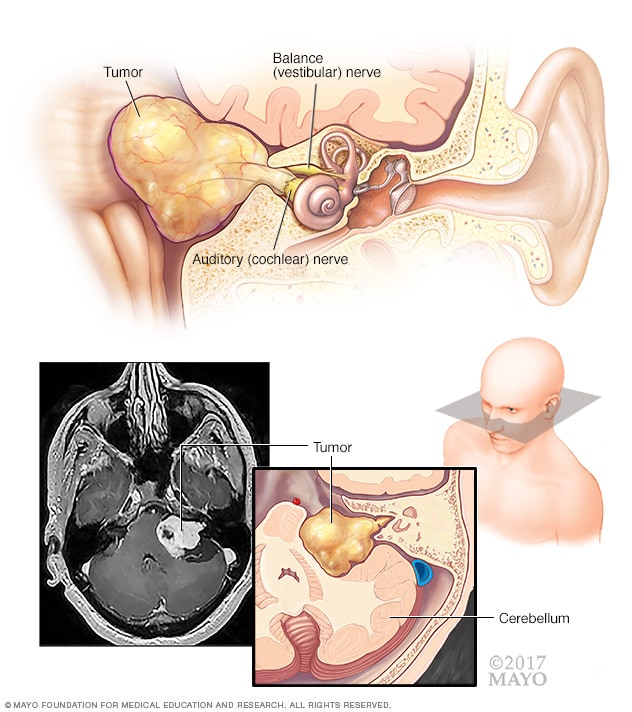
What about more sinister conditions? More rarely, tumours can grow at the back of your nose to block off the pressure tubes leading to your ears. Tumours from the balance nerve can also lead to sudden tinnitus and sudden hearing loss (acoustic neuroma). Tinnitus may be the first sign of such conditions, so you should get the tinnitus checked out by your ENT specialist in Singapore. The picture (credit to the Mayo Clinic) below illustrates how an inner ear nerve tumour can grow inside your ear towards the brain.
Is Tinnitus A ” Stress Reflex of the Inner Ear”?
For most tinnitus sufferers though, the MRI scan of your inner ears will be normal. So what can you do about your tinnitus? Is it driving you mad to the point of having difficulty sleeping? Are you are unable to focus on your work and perform your usual daily activities? Tinnitus is basically a stress reflex of the ear! Anything that stresses the ear out, may lead to the onset of tinnitus.
Tinnitus is also often what I call “the tip of the iceberg”. It is a very common symptom that sometimes has other deep-seated causes, such as anxiety and depression. But it’s tricky to try to decide which came first. The “chicken vs egg” situation! Was it the tinnitus that was truly causing the sleep issues? Or was it the lack of good quality sleep which led to the tinnitus disturbing you?
The Four Key Principles of Tinnitus Management:
1. Distraction
Keeping yourself busy and avoiding overly quiet or noisy situations can help distract you from the tinnitus. Tinnitus sufferers often find their tinnitus disturbs them more at night as it is quieter at bedtime.
2. Masking
This involves applying a band of soothing sounds to cover up the irritating tinnitus noise itself. Masking techniques can include using your favourite relaxing music in the background while some patients find it helpful to download a tinnitus app. Other patients purchase a sound machine to apply calming sounds to alleviate the effects of your tinnitus symptoms.
3.Adaptation and modulation
Over time, many tinnitus sufferers find that they don’t seem to notice their tinnitus as much as before. Why does this happen? This is thought to be due to the nerve endings of the inner ear gradually adapting to the constant tinnitus stimulus. What studies have so far been unable to ascertain is how the inner ear nerve endings can actually adapt to achieve this.
4. Habituation
Adaptation is very closely linked to the process of habituation. After a while, ranging from weeks to months, the inner ear nerve endings become habituated and no longer respond so sensitively. Guess what? The brain plays an important role in adaptation and habituation!
It may start to process the constant tinnitus stimulus differently over time. Individuals with a more neurotic personality may be more sensitive to the processing of sound. Such patients may stand a higher risk of developing tinnitus which is less likely to adapt and habituate with time.
HOW LONG WILL IT TAKE FOR MY TINNITUS TO IMPROVE?
This is probably the most common question I get asked by my tinnitus patients!
Although most tinnitus sufferers do eventually adapt to their symptoms, some patients take longer and need some medication to help them cope. So in this scenario. they may need some antidepressant and anti-anxiety medications to help them manage their tinnitus. Tinnitus counselling may also play an important role in helping the tinnitus sufferer. What is tinnitus counselling? So this often involves cognitive behavioural therapy to help tinnitus patients understand how to cope better.
So actually, how the tinnitus patient manages the emotional and psychological aspects, is extremely important. This then greatly impacts on the duration of time needed for tinnitus to improve. This inner ear compensation won’t just suddenly occur and may fluctuate with “good days” and “bad days”, depending on the changes around you.
Sometimes, tinnitus counselling may involve a trial of a white noise masking device to offer a form of auditory adaptation. This is a special type of hearing aid which aims to match the frequency band of the tinnitus noise to mask it. Hence it reduces the disturbing effects of tinnitus on your ear. However, it can be challenging to obtain a precise match between the sound frequency of tinnitus and the white noise masker. Visiting a tinnitus counsellor may help. Tinnitus counsellors are experienced audiologists who have been trained specifically in tinnitus management.
Finally, as a busy ENT specialist in Singapore looking after many patients with ear problems, I just want to say one important thing. Sudden tinnitus might be a warning sign of impending sudden hearing loss and dizziness. So please don’t delay seeking the help of your friendly ENT specialist if tinnitus starts!
Share this blog via: