
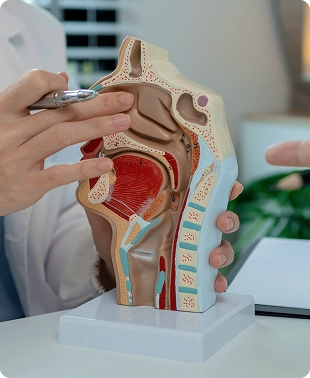



Throat Pain: 5 Tips on How to Feel Better


Suffering from a sore throat in Singapore is a very common problem. What can you do to feel better before you see an ENT specialist?
What Are the Three Causes of Sore Throat?
The top 3 reasons for a persistent sore throat are infection, allergy, and acid reflux! Let's discuss these 3 reasons for persistent or recurrent sore throat:
A) Infection
When you come down with the flu or a bad cold, a sore throat is often one of the first symptoms. This can be caused by a viral or bacterial infection of your throat. Sometimes, certain parts of your throat like the tonsils, are the main source of infection. The tonsils are lumps of lymph gland tissue at the back of your throat. They are part of the immune system, important in fighting infection in young children.
However, the tonsils become less important when you grow older. In fact, they usually shrink naturally around the ages of 5-8 years. This doesn't occur in everyone though! If they stay enlarged, there is a risk of further throat infections. It may sometimes be severe enough to need hospital admission when you can't swallow due to severe throat pain!
Strep throat infection is caused by Group B strep bacteria, a nasty bacteria that causes severe ear, nose and throat infections. A course of antibiotics is usually needed to treat this type of throat infection.
Other types of throat infections, such as acute pharyngitis, tend to occur with upper respiratory tract infections like the common cold or the influenza infection ("the flu"). These tend to get better if you have a healthy immune system.
B) Allergy
Nasal allergy problems may lead to a heavy backflow of mucus from your nose down into your throat. This may then lead to itchy throat inflammation. Sometimes, nasal allergies (allergic rhinitis) may cause the drainage pathways of the sinuses to swell up, causing a sinus infection. There is a risk of the sinus infection then spreading to cause a throat infection.
Please control your nasal allergies with the "Holy Trinity" of a sea-salt nasal rinse, nasal steroid spray and antihistamine medication. You should use them regularly first. Then once things have improved, you can taper down the medication and use them as needed in future. You should still continue to use your sinus rinse daily though. Nasal steroids, by the way, are pretty safe in both kids and adults, with minimal absorption into the body. Rarely, they can lead to dry nose and nosebleeds. We are also careful not to prescribe for prolonged periods in patients with glaucoma (elevated eye pressure).
C) Acid Reflux
The other common reason for sore throat and throat irritation is underlying reflux of acid from your stomach! Acid reflux may not always present in the classical manner of heartburn. It may instead cause throat irritation, chronic cough and a persistent urge to clear your throat with funny noises. It can sometimes even lead to stranger symptoms like burning tongue or altered taste sensation if the acid reflux is severe enough. Sometimes, the camera test of the stomach by your gastro specialist may not show anything abnormal but there may still be acid reflux which flows upwards to affect mainly your throat and voicebox areas.
Other tests may sometimes be indicated such as measuring the pH of your throat with a special fine probe, in addition to nasoendoscopy and/or a special X-ray with dye to swallow (barium swallow).
Dr Anabelle’s 5 Tips on How to Reduce Your Throat Pain
- Gargle with saltwater 3-4 times daily during an episode of sore throat to help cleanse your throat and soothe it
- Sucking on anti-inflammatory lozenges that often contain a safe numbing agent helps to reduce the severity of your throat pain.
- Keeping well-hydrated by drinking 6-8 glasses of warm water daily minimises the risk of your throat becoming too dry, which may worsen the throat pain and itchy throat.
- Controlling a postnasal drip of mucus from the back of your nose may help to reduce the itchy throat and throat discomfort. Using a saline douche to rinse out the nose can help to prevent this backdrip from flowing down into your throat to irritate it.
- Taking over-the-counter anti-inflammatory medicine such as Nurofen or Advil may help to relieve the throat pain so that you can eat and drink more easily.
If the sore throat doesn't seem to be getting better, then you should definitely get your throat thoroughly checked out by your friendly ENT specialist in Singapore:)


About Dr Annabelle Leong

Dr Annabelle Leong 梁翠娟
Senior Consultant ENT Surgeon
MBBS (Hons) (London), BSc (Hons);
DOHNS, MRCS (England), FRCS ORL-HNS (England)
Dr Annabelle Leong is a senior consultant ENT surgeon with more than 25 years of experience across the United Kingdom, Canada and Singapore. From childhood ENT concerns to hearing, balance and sleep problems in adults, she provides care across a broad range of ear, nose and throat conditions.
Known for being a patient and attentive listener, Dr Annabelle takes a sensible, holistic approach to care, considering the wider picture before recommending treatment. She favours conservative options where appropriate, with surgery considered when clinically indicated and appropriate for the patient’s overall care.