



Mouth Breathing and Blocked Nose: How to Breathe Better


Has persistent mouth breathing eventually led to changes in a person's facial structure and appearance? Sometimes, mouth breathing may have gone on longer than you think! We often hear from parents how they thought mouth breathing was "normal". It's quite common to find out that children and adults have been breathing through their mouths for a few years!
Is Persistent Mouth Breathing Abnormal?
Many children and adults come to see us with mouth-breathing problems at ENTcare Clinic in Singapore. When you have been breathing through your mouth for a long time, you wrongly assume that this is "normal" breathing. Actually, it is NOT normal to breathe through your mouth all the time.
More worryingly, persistent breathing through your mouth, especially in children, can lead to permanent and irreversible changes in facial bone structure. This may lead to having an overly long face, underdeveloped jaw and pouty "fish-lips". Sometimes, they may even have bad posture with their head sticking forward!
Mouth-breathing is abnormal because the nose is the main entry route for airflow in and out of your body when at rest and asleep. Breathing through your mouth may occur during vigorous exercise but much of the airflow still occurs through your nasal passages. The nasal lining coats the insides of your nasal passages with a protective mucus barrier to help filter out unwanted irritants.
What Will Happen If I Don't Stop Mouth Breathing?
Breathing through your mouth will lead to an uncomfortably dry mouth, bad breath and poor dental hygiene. Dentists hate seeing people breathing through their mouths, as it leads to reduced saliva flow to protect your teeth and gums. Some children present to us with stained teeth because they have been mouth breathing for so long! Tooth decay is another sign that your child may be breathing through their mouths for a long time!
Having your jaw hanging down with your mouth open all the time is an unhealthy habit. After prolonged mouth breathing, this may affect the growth pattern of your child's facial bones. "Mouth breather face" is similar to the term "Adenoid face"!
Does Mouth Breathing Affect My Sleep Quality?
Mouth breathing affects the overall quality of sleep and may cause the sufferer to wake up repeatedly. The nocturnal waking episodes may occur partially or completely, leading to a disrupted and noisy sleep pattern. Abnormal mouth-breathing during sleep may be due to underlying obstructive sleep apnea. There is recurrent airway collapse, leading to reduced oxygen airflow to your vital organs including the brain and heart. The risk of heart disease, high blood pressure, strokes and irregular heart rhythms (arrhythmias) may increase. Diabetics may find it more challenging to maintain good control of blood sugar levels. Rarely, sudden death may even be a consequence of untreated severe sleep apnea!
Why would someone suffer from persistent mouth breathing? This usually indicates some form of airway obstruction, most commonly the nose. If you cannot breathe through your nose because it feels blocked, this is abnormal and you should get it checked out soon. If your body cannot get adequate air into your nose, then it will automatically turn to the second best option of opening your mouth to maintain some airflow.
What Is The Number One Cause Of Mouth Breathing in Children?
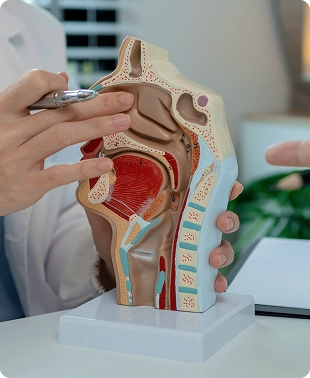
The number one cause of mouth breathing in children is enlarged adenoids! The adenoids are made of lymph gland tissue in the shape of a "meatball" growing at the back of the nose. They are just like the tonsils but they sit much higher up behind the nasal passages.
Why do adenoids grow bigger? Actually, many young children have enlarged adenoids but adenoid tissue is supposed to shrink naturally from the age of 5 onwards. Sometimes, due to poorly-controlled nasal allergies or a severe viral infection, adenoid tissue may grow bigger. Then every time the poor child falls ill with another viral infection like the flu, the adenoids are stimulated to stay enlarged and inflamed due to their reactive nature.
It may become a "chicken or egg" situation if adenoid inflammation persists long enough. Enlarged adenoids block off the back of the nasal airway and keep trapping many viruses and bacteria. So the child with adenoid infection (adenoiditis) often keeps falling ill again and again and again! Children with adenoid hypertrophy as the source of infection also may suffer a persistent cough, preventing them from sleeping well at night. Try sleeping well with a swollen meatball covered with sticky mucus growing at the back of your nose: You can't!
What Is The Number One Cause of Mouth Breathing Adults?
The Number One cause of mouth breathing in adults is a deviated nasal septum with enlarged, swollen inferior turbinates! The septum is a plate of cartilage which divides the left and right nasal passages. Many people have a crooked or deviated nasal septum which narrows their nasal passages. The turbinates are a pair of "sausages" inside the nose, which help to warm and humidify the air you breathe in.
Nasal allergies or allergic rhinitis cause the turbinates to swell up and block your nose, making it difficult to breathe clearly.
Most adults usually don't suffer adenoid hypertrophy because the adenoids usually grow smaller naturally around the ages of 5 to 8 years. This happens because other parts of the immune system such as the bone marrow and spleen mature to take over fighting infection.
What Are Other Causes of Mouth-Breathing?
Common ENT reasons for your nose and/or throat to feel blocked include:
- Deviated nasal septum (crooked nasal bones)
- Enlarged turbinates (soft tissue swelling inside the nose)
- Nasal allergies (allergic rhinitis)
- Enlarged adenoids (chunky lymph gland tissue which grows at the back of your nose)
- Enlarged tonsils (which can be large enough to cause overcrowding at the back of your throat)
- Floppy soft palate and uvula (the dangly midline structure you see in the mirror when you look into your mouth)
Obviously, bear in mind that rare causes like tumours in the nose, throat and airway may also cause airway obstruction, breathing difficulties and persistent mouth breathing.
There are so many ENT reasons for someone to persistently have to breathe through their mouth rather than their nose! The problem arises if this goes on for too long, as it becomes habitual, which may be difficult to correct even after the blocked nose has already been treated. So the earlier mouth breathing is treated by your ENT specialist in Singapore, the better it is!


About Dr Annabelle Leong

Dr Annabelle Leong 梁翠娟
Senior Consultant ENT Surgeon
MBBS (Hons) (London), BSc (Hons);
DOHNS, MRCS (England), FRCS ORL-HNS (England)
Dr Annabelle Leong is a senior consultant ENT surgeon with more than 25 years of experience across the United Kingdom, Canada and Singapore. From childhood ENT concerns to hearing, balance and sleep problems in adults, she provides care across a broad range of ear, nose and throat conditions.
Known for being a patient and attentive listener, Dr Annabelle takes a sensible, holistic approach to care, considering the wider picture before recommending treatment. She favours conservative options where appropriate, with surgery considered when clinically indicated and appropriate for the patient’s overall care.