



How to Sleep Better & Stop Snoring: 6 Tips

Do you know that poor sleep quality can lead to poor health and increased risk of early dementia? We now know how important good sleep is to maintain good physical health. Good sleep helps to prevent us from falling ill and maintain good mental fitness. As a busy ENT specialist in Singapore, I see many patients with poor sleep, snoring and breathing problems. They want to find a solution for their sleep problems and stop snoring.
At our ENT clinics in Singapore, patients with sleep problems tend to fall into 3 main groups:
- Those who have poor quality sleep due to difficulty breathing and often snore when asleep: We worry about underlying obstructive sleep apnea (OSA).
- Those who have difficulty falling asleep (Insomnia)
- Those who fall asleep but then wake up in the early hours and can't go back to sleep (Early Morning Waking)
The First Group of Sleep Patients: Obstructive Sleep Apnea ("I Can't Stop Snoring!")
The first group often snore loudly, suffer from restless sleep, gasping, grunting, and choking. This is made worse if they also suffer from a persistently blocked nose due to sinus issues, nasal allergies or deviated nasal septum. These make it difficult for them to breathe through their nose. They may wake up with morning headaches or feel easily tired during the daytime. Some may even fall asleep at the wheel or after lunch. They just can't stop snoring!
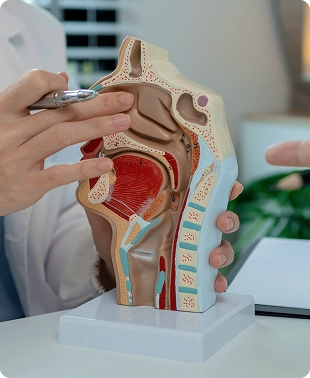
Some patients may be so sleep-deprived that they fall into microsleep episodes, where they fall asleep for a few seconds without realising that they are asleep: This is extremely dangerous as they may be driving or operating heavy machinery! A sleep study and endoscopy of the nose, throat and airway should be performed by their ENT specialist in Singapore. The underlying concern is that they may be suffering from Obstructive Sleep Apnea (OSA).
OSA causes poor sleep quality due to airway collapse, leading to impaired oxygen flow to the brain and heart. In the longer term, there is an increased risk of heart attacks and strokes. Rarely, sudden death may result due to irregular heart rhythms (arrhythmias) and early onset dementia.
The Second Group of Sleep Patients: Insomnia
In the second group, who have trouble falling asleep, stress is often the main trigger. Some people work late into the night, like market traders who stay awake for the international stock markets. Others may work night shifts and some just find it difficult to "switch off". They can't stop thinking about the next day's work deadlines and schedule. Some people, no matter what they do, remain unable to fall asleep without the aid of medication.
The Third Group of Sleep Patients: Early Morning Waking
Emotional issues may affect the third group who can fall asleep but then wake up in the middle of the night. Stress and depression disorders may disrupt their normal sleep pattern. Nobody sleeps through the night nonstop so don't worry if you occasionally wake up in the middle of the night.
Most of us sleep in 2-hourly sleep cycles but can transition on to the next cycle without waking up completely. As we grow older, our biological clock also shifts so we may find ourselves waking up earlier than we used to. The trick is to recognise this biological shift, making the most of our most restful sleep hours by going to bed earlier to get our recommended 6-7 hours every night. This may decrease with age of course.
Alcohol also causes early morning waking due to its delayed stimulant effect. So you might fall asleep more easily after drinking alcohol but it eventually lowers your blood sugar, hence waking you up later in the middle of your night's sleep.
Dr Annabelle's 6 Tips to Sleep Better and Stop Snoring
- Avoid caffeine intake after 3 pm, especially if you are caffeine-sensitive: This includes coffee, tea and Chinese tea.
- Avoid exercising late at night, as this stimulates your brain to prevent you from falling asleep quickly.
- Turn off all your electronic devices (phone, iPad, TV) at least 2 hours before your usual bedtime to allow you to wind down naturally.
- Avoid heavy meals just before bedtime: This can cause acid reflux and indigestion to prevent you falling asleep.
- Have a protein-rich meal for dinner which may promote tryptophan release to induce sleep mode.
- Minimise all forms of stress as stress is the number 1 cause of sleepless nights: Easier said than done! It may be quite difficult to completely stop thinking about work and social stressors!


About Dr Annabelle Leong

Dr Annabelle Leong 梁翠娟
Senior Consultant ENT Surgeon
MBBS (Hons) (London), BSc (Hons);
DOHNS, MRCS (England), FRCS ORL-HNS (England)
Dr Annabelle Leong is a senior consultant ENT surgeon with more than 25 years of experience across the United Kingdom, Canada and Singapore. From childhood ENT concerns to hearing, balance and sleep problems in adults, she provides care across a broad range of ear, nose and throat conditions.
Known for being a patient and attentive listener, Dr Annabelle takes a sensible, holistic approach to care, considering the wider picture before recommending treatment. She favours conservative options where appropriate, with surgery considered when clinically indicated and appropriate for the patient’s overall care.