


What Can Cause a Lump in the Neck?
Neck lumps and swellings are common and can develop from several structures within the neck. Many have a benign cause, although a persistent or enlarging lump should be assessed to determine what it is.

Neck lumps and swellings are common and can develop from several structures within the neck. Many have a benign cause, although a persistent or enlarging lump should be assessed to determine what it is.
The neck contains many lymph nodes that form part of the immune system. They filter lymph fluid and may become enlarged in response to infection or inflammation.
Common triggers include:
These are sometimes referred to as reactive lymph nodes. They may remain enlarged for several weeks, and occasionally longer, even after the original infection has resolved.
Less commonly, enlarged lymph nodes may be associated with an underlying cancer or lymphoma. A persistent or otherwise concerning lymph node may therefore require further investigation.
The major salivary glands include the parotid glands, located in front of the ears, and the submandibular glands, located beneath the jaw. A lump arising from one of these glands may be benign or malignant.
Assessment may involve imaging such as an ultrasound or CT scan. A fine needle aspiration (FNA) may also be performed in selected cases to obtain cells from the lump and help determine its nature before treatment is planned.
The thyroid is a butterfly-shaped gland located at the front of the neck. A lump or nodule within the thyroid may become noticeable as a swelling in this area. Thyroid nodules can also sometimes be associated with changes in thyroid hormone production.
Some neck lumps arise from the skin rather than deeper structures. One example is a sebaceous cyst, which can develop when a skin gland that produces sebum becomes blocked.
These cysts may gradually enlarge or become infected and painful. Depending on the symptoms and size of the cyst, surgical removal may be considered.
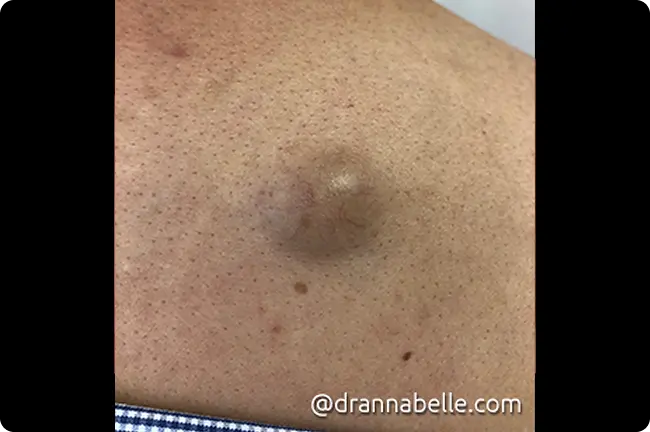
A 23 year old lady had been bothered by an enlarging painful lump on the back of her neck. This was removed in a short, safe and painless daycase procedure.
During development, the thyroid gland moves from the base of the tongue down towards its eventual position in the neck. A thyroglossal cyst can form when tissue remains along this developmental pathway.
These cysts may:
An enlarging or symptomatic thyroglossal cyst may require surgical removal.
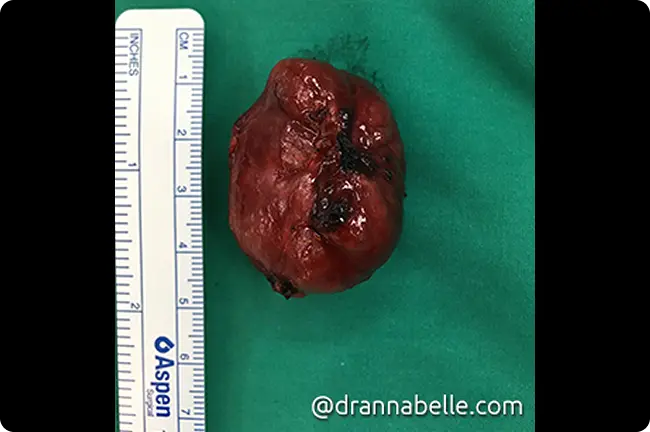
A large thyroglossal cyst removed from one of my patients who had been bothered by an enlarging lump on the right side of his neck.

Many neck lumps are related to temporary infections and may settle as the infection clears.
However, a neck lump should be assessed if it:
A new or persistent thyroid lump should also be assessed even if it is painless. Further investigation can help determine whether the swelling arises from the thyroid, a lymph node, salivary gland or another structure within the neck.
Assessment begins with examining the lump and considering factors such as its location, size, how long it has been present and whether it has changed over time. The ears, nose, throat and other areas of the head and neck may also be examined where relevant.
Depending on the type of lump suspected, further investigations may include:
The investigations needed depend on where the lump arises and what is suspected. Not every neck lump requires all of these tests.

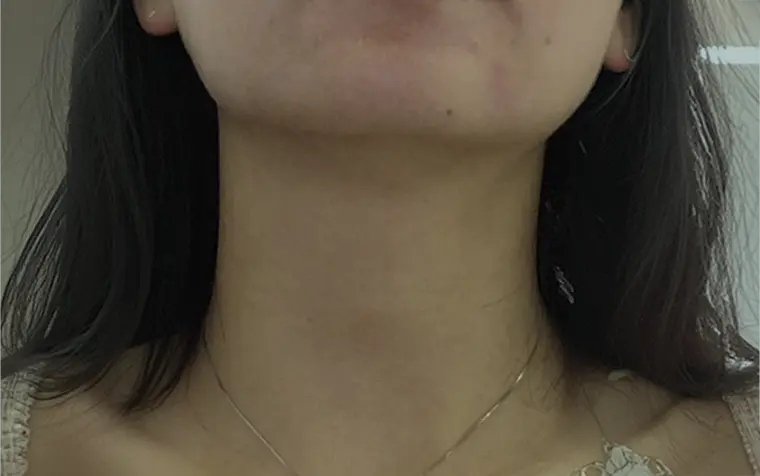
The thyroid is an important gland that produces hormones involved in regulating many of the body's functions. Thyroid problems can involve the structure of the gland, such as a lump or nodule, or the amount of thyroid hormone it produces.
Most thyroid nodules are benign. However, they should still be assessed to determine their characteristics and whether monitoring or treatment is needed.
Assessment of a thyroid lump may involve:
Not every thyroid nodule requires a biopsy. Whether FNA is recommended depends on factors such as the nodule's size and its appearance on ultrasound.
Thyroid disease can cause the gland to produce too little or too much thyroid hormone.
If thyroid surgery is being considered, an overactive thyroid generally needs to be adequately controlled beforehand. Severely uncontrolled hyperthyroidism can rarely lead to a potentially life-threatening complication known as a thyroid storm.
Treatment depends on the nature and size of the thyroid lump, whether it is causing symptoms and whether it is affecting thyroid hormone production.
Some thyroid nodules can be safely monitored with regular ultrasound scans, while others may require treatment.
Surgery may be considered when a thyroid lump:
Depending on how much of the thyroid needs to be removed, surgery may involve a hemithyroidectomy, which removes one half of the thyroid gland, or a total thyroidectomy, which removes the entire gland.
When surgery is required for a lump affecting one side of the thyroid, the nodule is usually removed together with that half of the gland during a hemithyroidectomy.
Important considerations include:
The extent of surgery and postoperative care depends on the thyroid condition being treated and the individual patient.
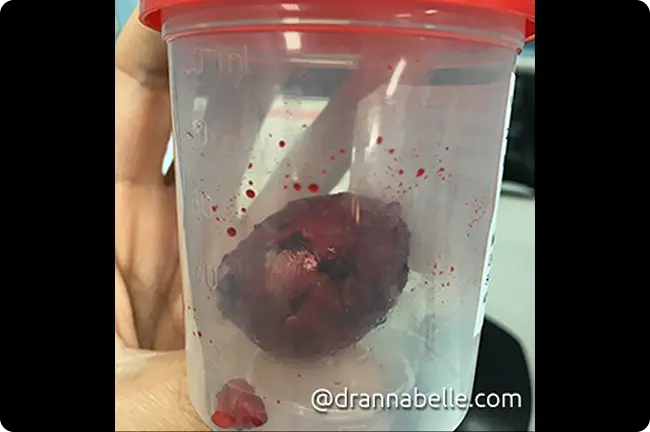
A large thyroid nodule removed in a hemithyroidectomy surgical procedure. The patient had been concerned about an enlarging thyroid lump in her neck, which was also causing her some pressure symptoms, especially when she lay flat.
Yes. Reactive lymph nodes can remain enlarged for several weeks, and sometimes longer, after an infection has resolved. However, a lump that continues to enlarge, does not gradually improve or has other concerning features should be assessed.
Yes. A thyroid nodule does not necessarily mean that thyroid hormone production is abnormal. Blood tests may therefore be normal even when a nodule is present, which is why ultrasound and other investigations may still be needed to assess the lump itself.
They can in some circumstances. A large thyroid swelling may affect nearby structures, while the nerves controlling the vocal cords run close to the thyroid gland. Persistent voice changes occurring alongside a neck or thyroid lump should therefore be assessed.
It depends on how much of the thyroid is removed and how well the remaining thyroid tissue functions. After a total thyroidectomy, lifelong thyroid hormone replacement is required. Following a hemi-thyroidectomy, some patients may produce sufficient thyroid hormone from the remaining half, while others may require replacement.
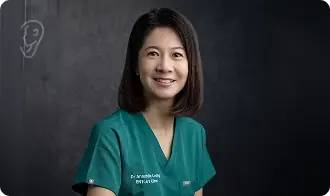
Dr Annabelle Leong 梁翠娟
Senior Consultant ENT Surgeon
MBBS (Hons) (London), BSc (Hons);
DOHNS, MRCS (England), FRCS ORL-HNS (England)
Dr Annabelle Leong is a senior consultant ENT surgeon with more than 25 years of experience across the United Kingdom, Canada and Singapore. She assesses adults and children with neck lumps arising from structures such as the lymph nodes, thyroid and salivary glands.
Where appropriate, Dr Annabelle can arrange investigations to determine the nature of a neck or thyroid lump and advise on monitoring, further investigation or surgical treatment based on the findings.