



Throat and Voice Treatment in Singapore

Dr Annabelle Leong 梁翠娟
Senior Consultant ENT SurgeonMBBS (Hons) (London), BSc (Hons); DOHNS, MRCS (England), FRCS ORL-HNS (England)
Woman sleeping peacefully in bed

Foreign Bodies in the Throat

Foreign bodies such as fishbones can become lodged in the throat while eating. In fact, fishbones lodged in the throat are among the most common ENT emergencies in Singapore.

Fishbones commonly become lodged around the tonsils or at the back of the tongue (tongue base). Depending on their location and depth, they may sometimes be removed in the clinic. A deeply embedded fishbone may require a short procedure under general anaesthesia for safe removal.

Fishbones can become deeply embedded in the soft tissues of the throat and may be difficult to remove in one piece. Rarely, a sharp bone can pierce the throat lining and cause a perforation. This increases the risk of infection, which can potentially spread deeper into the neck or chest.
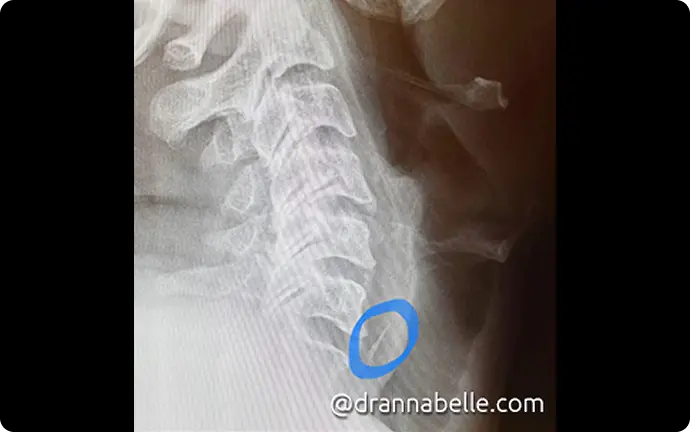

X-ray showing a fishbone lodged deep in the throat

A 30 year old lady accidentally swallowed a fishbone whilst eating fish porridge. An X-ray of her neck confirmed the presence of the fishbone (circled) quite deep down her throat. She underwent a short procedure under general anaesthesia to have the fishbone removed safely.

A 3 cm fishbone wedged at the back of the tongue

Another patient of mine suddenly felt a sharp pain inside her throat whilst eating a cod fillet. Careful examination showed a 3 cm long fishbone wedged at the back of her tongue. Fortunately, we managed to fish it out safely in clinic.

Hoarse Voice and Voice Problems

Hoarseness refers to an abnormal change in the voice caused by a problem affecting the vocal cords within the voice box (larynx). The voice may sound strained, weak, raspy or breathy, and the change can affect both everyday communication and people who rely heavily on their voice for work.

When speaking or singing, the vocal cords come together and vibrate to produce sound. A lump, swelling or other problem affecting the vocal cords can therefore change the quality, strength or pitch of the voice.

What Can Cause a Hoarse Voice?

Hoarseness can have several possible causes, including:

  • Acute laryngitis, commonly occurring during a cold or the flu
  • Voice misuse or overuse, such as shouting or excessive voice use
  • Vocal cord lesions, including polyps, cysts and nodules
  • Acid reflux, which can irritate the voice box
  • Smoking
  • Neurological conditions, such as those occurring after a stroke
  • Cancer of the voice box (larynx)

A hoarse voice that does not improve after 2 weeks should be assessed by an ENT specialist, particularly if you currently smoke or have smoked previously.

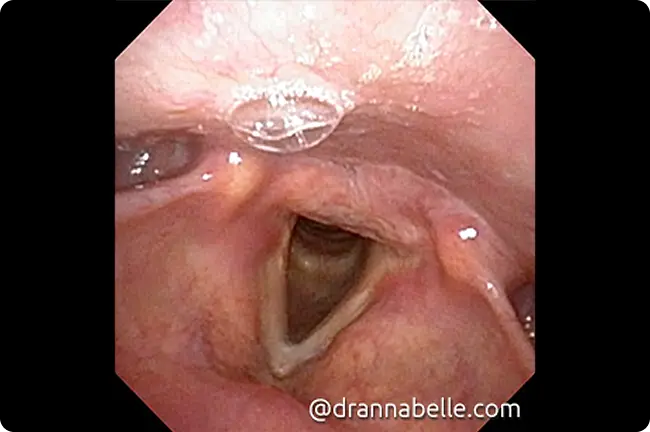
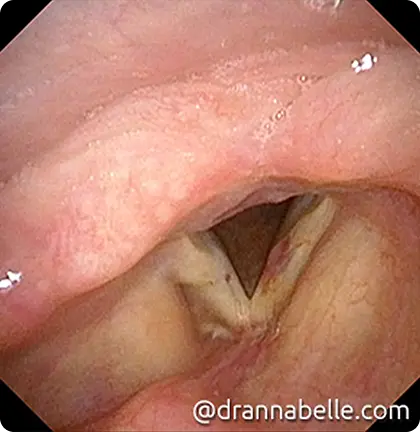
Vocal cords at rest forming a V shape

The larynx has 2 important functions as the airway and the voicebox. At rest (when you are not speaking), the vocal cords are relaxed and form a 'V'.

Vocal cords coming together when speaking

When you speak, the vocal cords come together and undulate in a special wave to produce the sound of your voice.

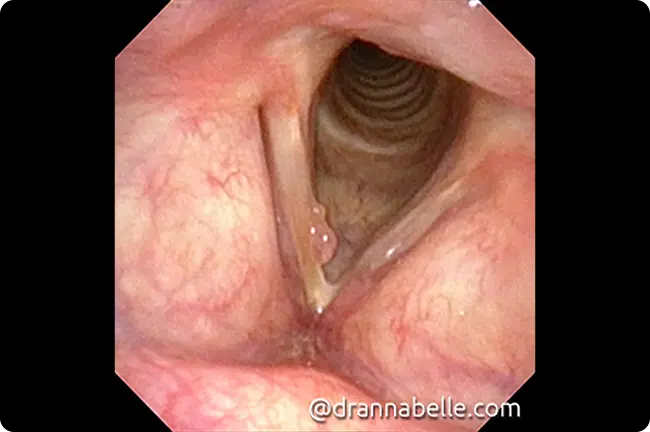
Polyp on the left vocal cord

A 38 year old teacher had noticed that her voice had been hoarse for the past 3 months. Examination of her voicebox revealed a polyp (usually a benign growth) on her left vocal cord. This was removed in a short daycase procedure and her voice returned to normal.

Larynx view after treatment

A 26 year old smoker’s voice had been hoarse for 6 weeks. The lump on his right vocal cord turned out to a very early stage of pre-cancer which was surgically removed.

Dr Annabelle's Tips to Prevent Hoarseness

Simple measures that may help reduce irritation and strain on the voice include:

  • Avoid smoking and exposure to second-hand smoke
  • Limit caffeine and alcohol
  • Avoid excessive voice strain, including shouting or prolonged whispering
  • Drink plenty of water (6–8 glasses daily)
  • Reduce spicy, deep-fried or oily foods if these aggravate your symptoms

Lump in the Throat Sensation

A persistent feeling that something is stuck in the throat, despite there being no actual obstruction, is sometimes known as globus pharyngeus or a “foreign body” sensation. If the sensation eases when swallowing food, it is less likely to indicate a more concerning cause.

Common causes include:

  • Postnasal drip: where secretions from the nose flow down and irritate the throat or voice box
  • Acid reflux: where stomach contents travel upwards and irritate the throat

Although a lump-in-the-throat sensation often has a benign cause, persistent symptoms should still be assessed. Dr Annabelle may perform a flexible nasoendoscopy to examine the nose, throat and voice box and check for an underlying problem. Rarely, a throat or voice box tumour may cause a similar sensation.

Dr Annabelle examining a patient's throat with a flexible nasoendoscope

Dr Annabelle examines the throat of a patient in Sri Lanka with a flexible nasoendoscope during a charity medical mission. He had been suffering from a lump in throat sensation for the past 6 months.

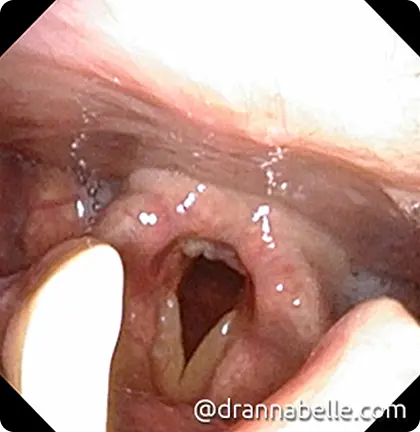
Cyst growing next to the epiglottis

This patient with a persistent lump in throat sensation actually turned out to have a cyst growing next to his epiglottis (flap of soft tissue which usually protects the airway when food is being swallowed).

Persistent Cough

A cough that persists for longer than 2 weeks should be thoroughly assessed, even if you have never smoked. Depending on the symptoms, assessment may involve both a respiratory (chest) specialist and an ENT specialist.

How Is a Persistent Cough Assessed?

Chest imaging, such as a chest X-ray or CT scan, may be performed to look for a cause involving the lower airways or lungs.

If no apparent cause is found there, an ENT specialist may perform a flexible nasoendoscopy to examine the throat, voice box and upper airway. In some cases, a persistent cough may simply be the lingering effect of a recent bout of flu.

What Can Cause a Persistent Cough?

Possible ENT-related causes include:

  • Postnasal drip: Secretions from the nose due to allergy or infection can flow down and irritate the voice box, triggering a cough.
  • Acid reflux: Stomach acid can travel upwards and inflame the voice box. The cough may be particularly troublesome at night when lying down.
  • Growths or lumps: A growth affecting the throat or voice box may sometimes cause persistent coughing. Most voice box lumps are benign, although cancerous tumours can rarely present with a chronic cough, sometimes alongside hoarseness or shortness of breath.

Medication may be prescribed to target underlying causes such as postnasal drip or acid reflux.

Postnasal drip causing a persistent cough

One of my patients, a 45 year old lady with a persistent cough for one month, was found to have a postnasal drip as the cause of her cough. Treating her with a course of nasal medications helped her feel a lot better.

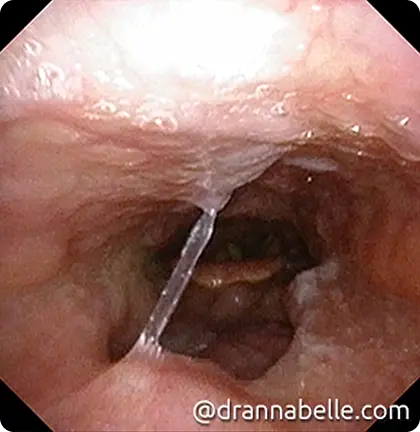
Acid reflux causing chronic inflammation of the voice box

Another patient, a 50 year old gentleman, was troubled by a cough which was worse at night and when lying flat. Examination revealed acid reflux to be the cause of his cough, as it led to chronic inflammation of his voicebox.

Haematoma on the left vocal cord from excessive coughing

Sometimes, excessive coughing may traumatise the vocal cords such as in this case, where a haematoma (blood clot) has formed on this patient's left vocal cord (viewer's right).

ENTcare Clinic Logo

Persistent throat or voice symptoms?

woman touching her throat

Sore Throat and Tonsillitis in Adults

Sore throats commonly occur during a bout of flu or another viral infection, known as viral pharyngitis. While many sore throats improve on their own, antibiotics may sometimes be prescribed when a bacterial infection is suspected or confirmed.

Throat infections can make eating and drinking difficult. If you are unable to swallow properly, hospital admission may sometimes be needed so that fluids, antibiotics and pain relief can be given through an intravenous drip.

Tonsillitis

Tonsillitis is an infection of the tonsils that may be caused by a virus or bacteria. Symptoms can include:

  • A painful sore throat
  • High fever
  • Difficulty swallowing

Many cases of tonsillitis settle with supportive care, including pain relief and antibiotics where appropriate.

If tonsillitis occurs frequently, such as more than 3–4 times a year, surgical removal of the tonsils (tonsillectomy) may be advised to help prevent recurrent infections.

Severe tonsillitis can also occasionally lead to complications, including collections of pus around the tonsils or infection spreading into the neck.

Severe tonsil infections with pus around the tonsils

Tonsil infections (tonsillitis) may be so severe and painful that the patient may not be able to eat or drink. Sometimes, the infection may spread to form collections of pus (infected fluid) around the tonsils and even spread to the neck.

When Should a Persistent Sore Throat Be Checked?

A sore throat that does not improve after about a week, or continues to worsen, should be assessed by an ENT specialist. A flexible nasoendoscopy may be performed to examine the throat and voice box and rule out a more concerning underlying problem.

Flexible nasal endoscopy to examine the nose, throat, airway and voice box

Having a flexible nasal endoscopy to examine the nose, throat, airway and voicebox is a simple, safe and very short procedure performed in clinic.

Frequently Asked Questions About Throat and Voice Problems

Morning hoarseness can occur for several reasons, including dryness or irritation of the throat and voice box. Acid reflux may also contribute in some people, particularly when reflux occurs while lying down at night. Persistent morning hoarseness should be assessed if it does not improve.

Yes. Prolonged or excessive voice use can strain the vocal cords and temporarily affect the strength or quality of your voice. Repeated voice strain may also contribute to vocal cord problems, particularly in people who use their voice extensively for work.

Occasional throat clearing is common, but frequent throat clearing may occur when the throat or voice box is being irritated. Possible contributors include postnasal secretions and acid reflux. Repeated throat clearing can itself further irritate the vocal cords.

Stress or tension may contribute to a globus sensation in some people. However, a persistent feeling that something is stuck in the throat should not automatically be attributed to stress, particularly if it is accompanied by swallowing difficulties or other persistent throat symptoms.

Our Throat and Voice Specialist

Dr Annabelle Leong

Dr Annabelle Leong 梁翠娟

Senior Consultant ENT Surgeon

MBBS (Hons) (London), BSc (Hons);

DOHNS, MRCS (England), FRCS ORL-HNS (England)

Dr Annabelle Leong is a senior consultant ENT surgeon with more than 25 years of experience across the United Kingdom, Canada and Singapore. She assesses adults and children with throat and voice concerns, including persistent hoarseness, swallowing or throat symptoms and conditions affecting the voice box.

Depending on the underlying cause, Dr Annabelle can advise on appropriate medical or surgical treatment for throat and voice concerns.

Depending on the underlying cause, Dr Annabelle can advise on appropriate medical or surgical treatment for throat and voice concerns.

More about Dr Annabelle
Get in touch
Hear Well, Breathe Well, Sleep Well, Live Well.

Whether you are visiting ENTcare for yourself or your child, Dr Annabelle and the clinic team aim to make specialist ENT care feel approachable, supportive and easy to understand.

Clinic Address

Mount Elizabeth

Medical Centre

3 Mount Elizabeth, #15-05

Singapore 228510

Contact Information
Tel:6908 8969WhatsApp:8093 7395
Consultation Hours

Mon - Fri : 9am to 5pm

Sat : 9am - 1pm