Ear and Hearing Treatment in Singapore

Dr Annabelle Leong 梁翠娟
Senior Consultant ENT SurgeonMBBS (Hons) (London), BSc (Hons); DOHNS, MRCS (England), FRCS ORL-HNS (England)
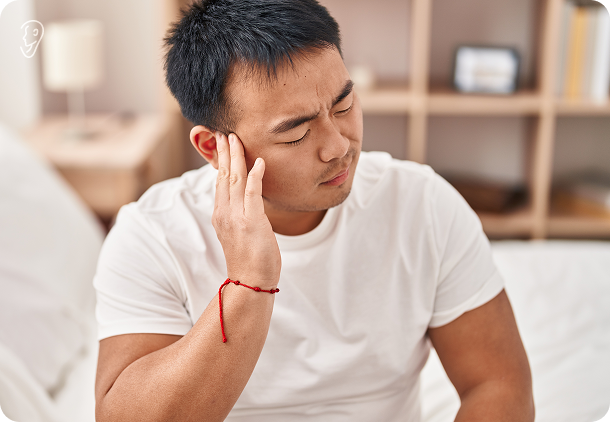
man touching ear due to pain

Common Ear Problems

Ear infections are common and may cause symptoms such as:

  • Ear pain
  • Bleeding from the ear
  • A blocked ear
  • Smelly ear discharge

Digging inside the ears to remove earwax can increase the risk of infection or injury. Objects such as cotton buds may damage the delicate skin of the ear canal or eardrum and, if pushed too deeply, can potentially injure structures further inside the ear, including the hearing bones.

Earwax and Impacted Wax

Earwax has a protective role. It contains natural oils that help coat the skin of the ear canal, so the ears do not need to be completely free of wax. The ear is also naturally self-cleaning, with the skin lining the ear canal gradually moving outwards and carrying most wax with it.

Sometimes, however, earwax can become trapped because of the type or consistency of the wax or the shape of the ear canal. If this happens:

  • A few drops of clean olive oil may help soften the wax so that it can move out naturally.
  • If the wax remains trapped, an ENT specialist can gently remove it using specialised instruments under a microscope.
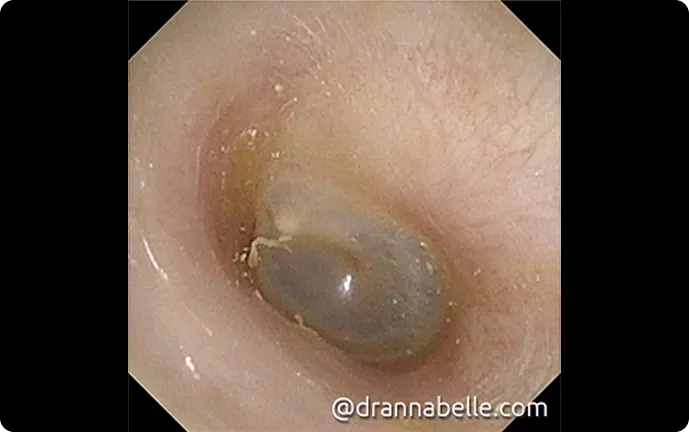
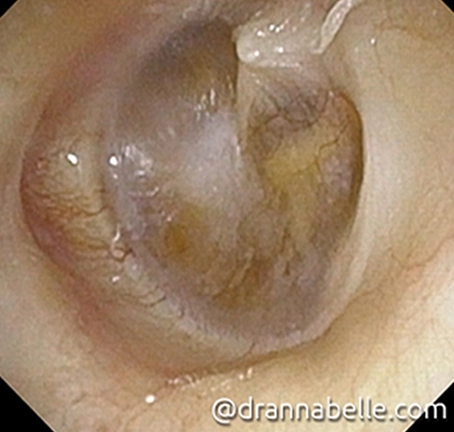
Normal left eardrum and ear canal

Normal left eardrum and ear canal.

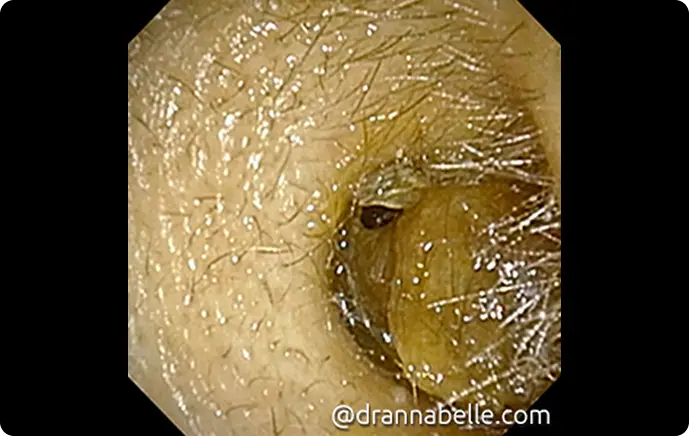
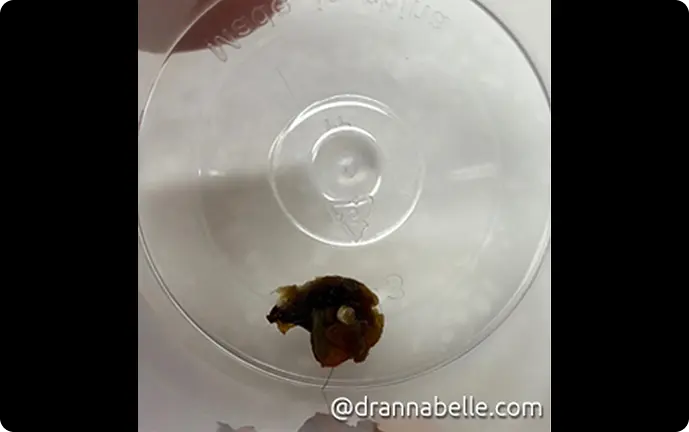
Huge impacted wax plug blocking the ear canal

Huge impacted wax plug blocking the ear canal.

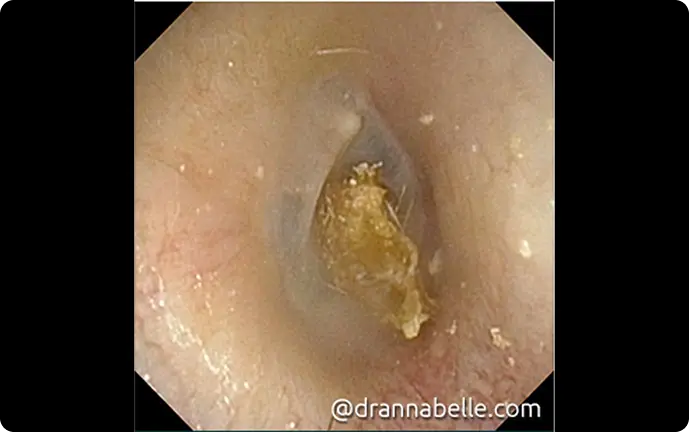
Wax stuck onto the right eardrum from cotton buds

Wax stuck onto the right eardrum, due to the use of cotton buds to dig the ear. Cotton buds only worsen the situation by pushing the wax deeper into the ear.

Hearing aid component embedded in earwax

A patient of mine who wore a hearing aid had been noticing a lot of distorted sounds and a feeling of ear blockage for a few weeks. Examination revealed that a small component of the hearing aid had fallen off and become embedded in earwax. Removal of the wax and the foreign body immediately helped him to feel much better.

Fungal Ear Infection (“Singapore Ear”)

Fungal infection of the ear canal is sometimes referred to as “Singapore Ear” and is relatively common in Singapore. The warm, humid tropical climate can encourage fungal organisms to grow within the moist environment of the ear canal.

A fungal ear infection may cause itching and pain. Treatment involves thoroughly cleaning the fungal debris from the ear under a microscope, as recurrence can be common. Antifungal drops or ointment may then be applied inside the ear to help eradicate any remaining fungal spores.

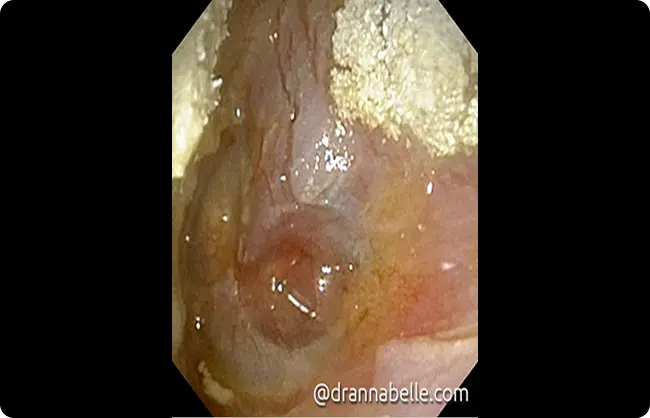
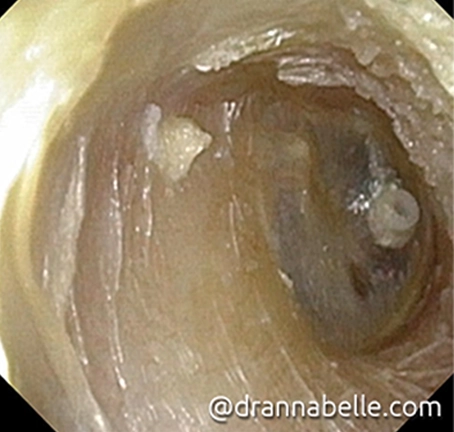
Fungal spores seen inside the left ear

Fungal spores (whitish furry patches) seen inside left ear with left eardrum infection.

Glue Ear and Acute Ear Infection

Glue ear can cause a blocked sensation in the ear and hearing loss. If the trapped fluid becomes infected and turns into pus, the patient may also develop severe ear pain and fever.

These problems can sometimes develop after a bad cold or the flu. This is because the space behind the eardrum is connected to the back of the nose by the Eustachian tubes, specialised tubes that help equalise pressure in the middle ear. These are the same tubes that open or “pop” when your ears adjust to pressure changes during a flight.

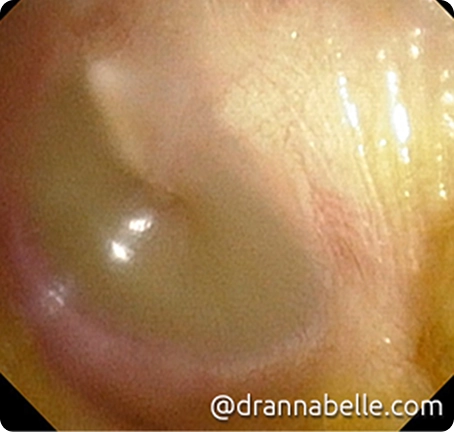
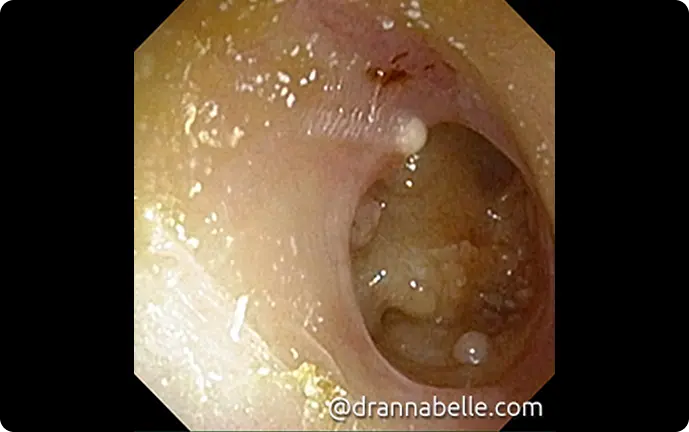
Turbid yellowish fluid behind the left eardrum

Turbid yellowish fluid seen behind the left eardrum: Left ‘glue ear’.

Frank yellow pus behind a bulging left eardrum

Frank yellow pus seen behind bulging left eardrum in a patient who presented with fever and left ear pain. He had the pus drained via a small incision in his eardrum and was given a course of antibiotics.

Ventilation tube inserted for persistent glue ear

This 8 year old boy had persistent glue ear causing him to suffer hearing loss so he had a tiny ventilation tube (grommet) inserted into his eardrum to improve its ventilation. The trapped fluid was suctioned away during the same procedure which was done under a short general anaesthetic.

Eardrum Perforations and Infections

Ear infections can sometimes result in an eardrum perforation, or a hole in the eardrum, which may cause persistent ear discharge and hearing loss. After the ear has been carefully cleaned, treatment may include antibiotic ointment or eardrops to clear the infection. To reduce the risk of further ear infections, patients are generally advised to:

  • Avoid digging or inserting objects into the ears
  • Keep the ears dry, including during showering

Eardrum perforations that do not heal on their own may require surgical repair to help prevent further infections. Depending on the size, location and complexity of the perforation, repair may sometimes be performed through the ear canal itself without an external visible scar, an approach referred to as “scarless eardrum repair”.

Large perforation of the right eardrum

Subtotal or extremely large perforation of the right eardrum, revealing the structures of the middle ear which are usually hidden behind the intact eardrum.

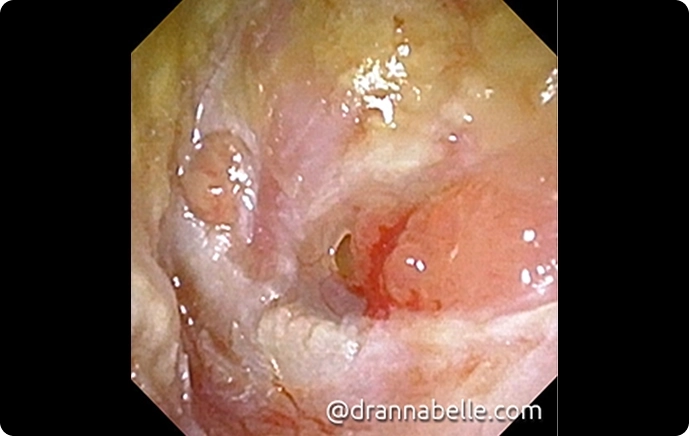
Active left eardrum infection with perforation

Active left eardrum infection with perforation seen.

ENTcare Clinic Logo

Troubled by ear or hearing problems?

woman wearing ear piece

Hearing Loss in Adults and Children

Hearing loss can affect both adults and children and may have a number of causes, including:

  • Impacted earwax
  • Ear infections
  • Foreign bodies in the ear
  • Eardrum perforations (ruptured eardrums)
  • Fluid trapped behind the eardrum (glue ear), such as after a bad cold
  • Longstanding ear disease, including destructive skin cysts
  • Abnormal fixation of the hearing bones
  • Age-related hearing loss

Some people may experience sudden hearing loss. This should be assessed immediately to optimise the chance of recovery and rule out more serious underlying conditions, including inner ear or brain tumours.

Difficulty hearing should be thoroughly investigated with a full medical history and examination. A hearing test (audiogram) is also performed to determine the type and degree of hearing loss and help guide appropriate treatment.

Depending on the cause, treatment may include:

  • Grommets (ventilation tubes) to help ventilate the middle ear
  • Myringoplasty to repair a perforated eardrum
  • Ossiculoplasty or stapedotomy to reconstruct or address problems involving the hearing bones
  • Hearing aids or hearing implants where appropriate

Ear and Hearing Problems in Children

Children can be particularly prone to ear problems, including impacted earwax and acute ear infections. This may be partly related to their developing immune system and immature Eustachian tube function, which can affect pressure regulation in the middle ear.

Foreign Bodies in the Ear

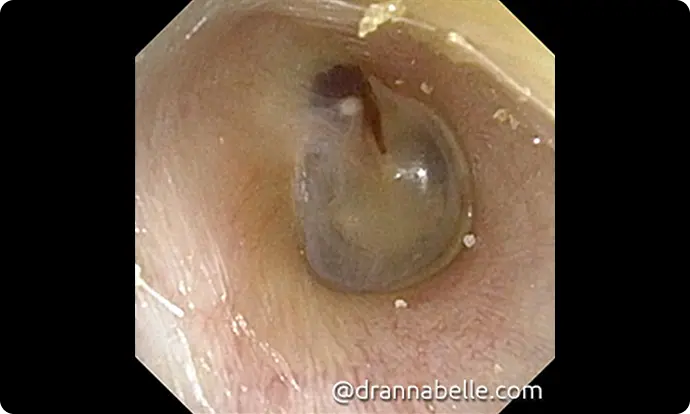
Small blood clot on the right eardrum after a toy car wheel was inserted

Small blood clot noted on right eardrum in a 3 year old boy who had stuffed a toy car wheel deep into his ear.

Young children may insert foreign objects such as beads or toy parts into their ears, sometimes without their parents realising. The foreign body may only be discovered after an ear infection develops.

Children can react differently. Some may seem completely unbothered, while others may:

  • Tug repeatedly at the affected ear
  • Try to dig inside the ear with their fingers

Hearing Loss in Children

Hearing loss in children can sometimes go unnoticed and untreated. Newborn hearing screening is commonly used to identify congenital hearing loss early, allowing treatment to begin sooner and support the child's ability to learn to speak and communicate effectively.

Where hearing loss is identified:

  • Hearing aids may initially be trialled.
  • Speech and language development is closely monitored.
  • Cochlear implants may be explored with parents if hearing aids do not provide sufficient benefit.

Hearing Implants and Cochlear Implants

Hearing implants can help improve hearing and quality of life for suitable patients when conventional hearing aids or standard ear surgery do not provide sufficient benefit.

They may also be used to rehabilitate severe hearing loss in one ear or help manage tinnitus in selected patients.

  • Types of Hearing Implants

Different hearing implants may be suitable for different types of severe to profound hearing loss. Options include:

  • Bone-anchored hearing aids (BAHA)
  • Bonebridge
  • Vibrant soundbridge
  • Cochlear implants

More than 300,000 cochlear implants have been performed worldwide since 1985, with good results reported in most cases.

  • How Do Cochlear Implants Work?

Cochlear implants are surgically implanted devices that stimulate the inner ear, or cochlea, using electrical signals. These signals are interpreted by the brain as sound, allowing the patient to hear.

The procedure may be performed as day surgery, although patients may prefer to stay in hospital overnight and return home the following day.

After surgery:

  • Around 2–3 weeks: The cochlear implant is usually switched on.
  • Over the following few months: Specialised speech therapy helps the patient learn to use the new cochlear implant.
Patient who had a cochlear implant

One of my happy patients who wishes she had done her cochlear implant even earlier! The sound quality that her cochlear implant gives her is far superior than that of her previous hearing aid. (Photo taken and published with patient's permission.)

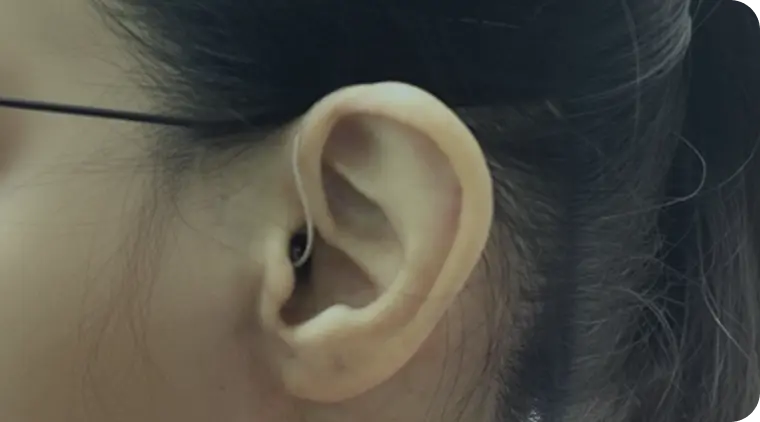
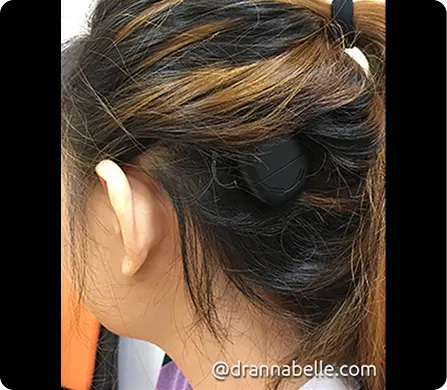
Patient wearing a left cochlear implant

Patient wearing left cochlear implant.

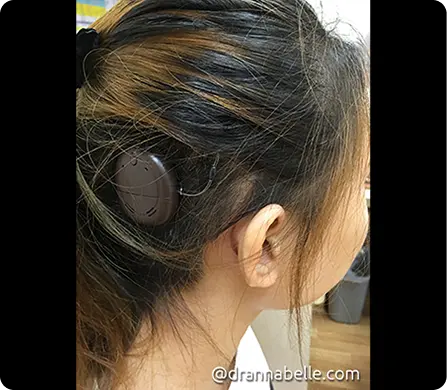
Patient wearing a right cochlear implant

Patient wearing right cochlear implant. Wearing bilateral cochlear implants, and not just on one side, is the ideal situation if the patient suffers from severe hearing loss in both ears.

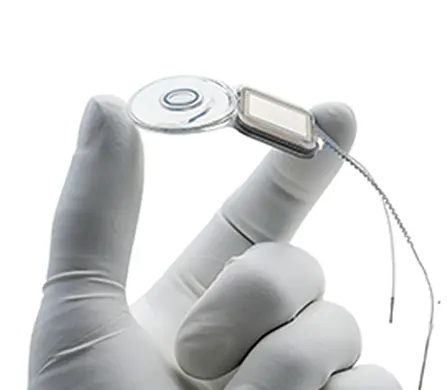
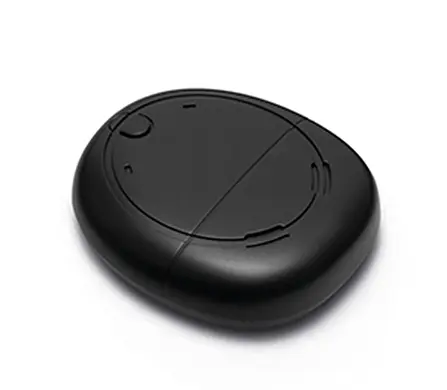
Internal part of a cochlear implant

What the internal part of a cochlear implant looks like: this part is inserted into the inner ear to stimulate it electrically to help hearing.

Outer part of a cochlear implant

What the outer part of a cochlear implant looks like. This securely sits on the head with the help of a magnet and may be taken off anytime.

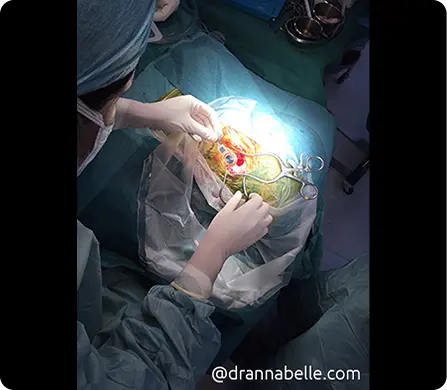
Dr Annabelle performing Bonebridge implant surgery

Dr Annabelle performs surgery to insert a Bonebridge implant to help her patient hear.

Tinnitus

Tinnitus is the perception of noise that commonly originates from the inner ear or hearing nerve and is often associated with hearing loss.

The sound can vary from person to person and may be:

  • Pulsatile: A rhythmic sound similar to a heartbeat
  • Non-pulsatile: Sounds such as humming, buzzing, ringing or whooshing

In some cases, tinnitus may also arise from twitching of the middle ear muscles and eardrum.

Because tinnitus can occur alongside hearing loss, assessment usually involves a thorough medical history and examination together with a hearing test (audiogram).

Although many cases of tinnitus are benign, further investigation may sometimes be needed. An MRI scan of the inner ear or brain may be recommended to rule out rarer but more serious conditions, including glomus tumours (blood vessel tumours) and acoustic neuromas (inner ear nerve tumours).

Treatment depends on the underlying cause and severity of the tinnitus and may require assessment and management by an experienced ear specialist.

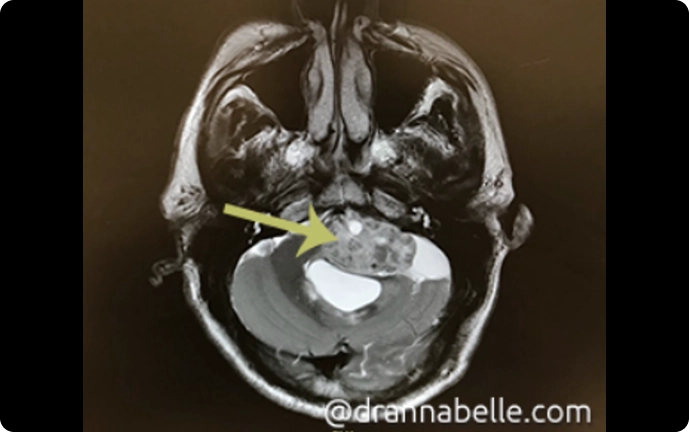
Large left inner ear tumour (acoustic neuroma) which has grown to compress the brain

Large left inner ear tumour (acoustic neuroma) which has grown to compress the brain. These inner ear tumours may present initially with tinnitus as well as hearing loss.

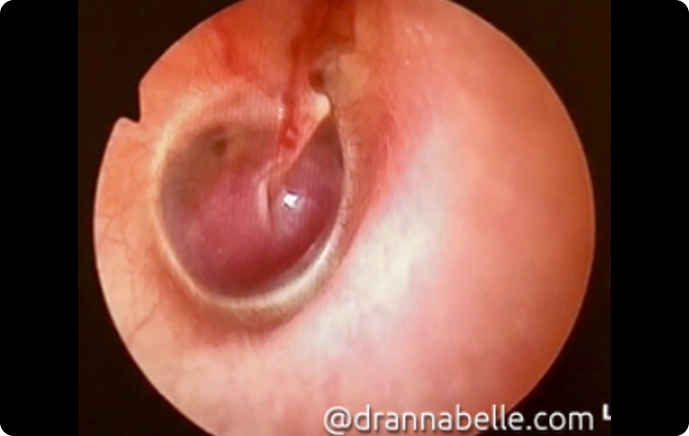
Glomus tumour appearing as a pulsating reddish mass

Glomus tumour appearing as a pulsating reddish mass behind the right eardrum: 'the setting sun' sign.

Frequently Asked Questions About Ear and Hearing Problems

A blocked-ear sensation is not always caused by earwax. Changes in middle-ear pressure, fluid behind the eardrum or other ear conditions can also cause fullness or pressure. An examination can help determine what is causing the sensation.

Changes in air pressure during take-off and landing require the Eustachian tubes to equalise pressure behind the eardrum. If this does not happen effectively, the ears may feel blocked, uncomfortable or painful until the pressure equalises.

Some degree of age-related hearing loss can occur as people grow older. However, hearing changes should not automatically be assumed to be due to ageing. A hearing test can determine the type and degree of hearing loss and help identify whether further assessment or treatment is needed.

Persistent ear pain, discharge, recurrent infections or changes in hearing should be assessed, particularly if symptoms do not settle or keep returning. Sudden hearing loss should be assessed immediately to optimise the chance of recovery and investigate the underlying cause.

Our Ear and Hearing Specialist

Dr Annabelle Leong

Dr Annabelle Leong 梁翠娟

Senior Consultant ENT Surgeon

MBBS (Hons) (London), BSc (Hons);

DOHNS, MRCS (England), FRCS ORL-HNS (England)

Dr Annabelle Leong is a senior consultant ENT surgeon with more than 25 years of experience across the United Kingdom, Canada and Singapore. Ear and hearing disorders are among her clinical interests, and she assesses both adults and children with concerns including ear infections, hearing loss and tinnitus.

Her experience in ear and hearing care includes the assessment and management of hearing loss, eardrum and middle-ear problems, as well as hearing rehabilitation where appropriate. Depending on the condition, treatment may range from medical management to ear surgery or hearing implants.

Her experience in ear and hearing care includes the assessment and management of hearing loss, eardrum and middle-ear problems, as well as hearing rehabilitation where appropriate. Depending on the condition, treatment may range from medical management to ear surgery or hearing implants.

More about Dr Annabelle
Get in touch
Hear Well, Breathe Well, Sleep Well, Live Well.

Whether you are visiting ENTcare for yourself or your child, Dr Annabelle and the clinic team aim to make specialist ENT care feel approachable, supportive and easy to understand.

Clinic Address

Mount Elizabeth

Medical Centre

3 Mount Elizabeth, #15-05

Singapore 228510

Contact Information
Tel:6908 8969WhatsApp:8093 7395
Consultation Hours

Mon - Fri : 9am to 5pm

Sat : 9am - 1pm